How to Prepare for IVF Naturally in 90 Days: A Complete Evidence-Based Guide
If you’re about to start IVF, preparing naturally doesn’t mean turning your kitchen into a supplement museum or treating pineapple like a fertility deity. To prepare for IVF naturally simply means improving the biology you can actually influence — your metabolism, inflammation, sleep, nutrient status, and sperm quality — so that you walk into treatment with the best possible baseline. This is a consultant’s evidence-based, 90-day plan for doing exactly that, with the science kept honest and the “miracle cure” nonsense left out.
Quick take · screenshot this
If you do nothing else for 12 weeks
- Stop nicotine — smoking, vaping & cannabis
- Pause alcohol
- Eat Mediterranean-ish most days
- Treat sleep like it’s part of your protocol
- Move consistently (moderate cardio + a little strength)
Everything else is fine-tuning, not the foundation.
Why 90 days? Because eggs and sperm don’t update like phone apps
A full cycle of human spermatogenesis takes about 74 days (Griswold, 2016). That’s why fertility advice keeps pointing to a roughly three-month window: the sperm being made around the time of your IVF cycle are being produced now, so the next 2–3 months are a genuine opportunity to influence sperm quality through lifestyle.
The egg’s environment develops over months too — though more slowly than people often assume. The antral phase of follicle growth, from antrum formation to a mature preovulatory follicle, takes roughly 60 days (about two menstrual cycles), with the final dominant follicle maturing over the last couple of weeks (Williams & Erickson). The earlier stages take far longer — full folliculogenesis is on the order of a year — which is exactly why you can’t “fix” egg quality overnight. But the months before IVF still shape the follicular environment that will matter for your cycle.
So 90 days is a practical window: long enough for daily habits to plausibly influence the sperm being produced now and the follicular environment ahead, short enough to actually stick to.
A quick note on the science (so we don’t get lost in TikTok)
IVF studies measure a lot of different things, and it helps to know which is which:
- Intermediate markers: number of eggs retrieved, mature oocytes, fertilisation rate, embryo quality, blastocyst formation.
- Clinical outcomes: implantation, clinical pregnancy, miscarriage, and live birth — the one that matters most.
Lifestyle changes sometimes improve the intermediate markers and sometimes the clinical outcomes — but the effects are usually modest, and they vary by age, diagnosis, BMI and study quality. I’ll flag the strength of the evidence as we go, because honest expectations are part of good preparation.
Step 1 — Remove the biggest IVF friction (Days 90–61)

Smoking, vaping and cannabis: the unglamorous but powerful change
Professional guidance summarises the reproductive risks of tobacco, nicotine and marijuana across ovarian function, sperm parameters, early pregnancy and ART outcomes (ASRM, 2024). This is one of the highest-value changes you can make.
Do this: stop now. If quitting is hard, ask your GP or clinic for support — this is biology plus habit loops, not a matter of “just trying harder.”
Alcohol: a clean 90-day experiment
The general fertility data on alcohol is mixed, but one well-known IVF cohort study (Rossi et al., 2011) found that women drinking four or more drinks per week had about 16% lower odds of a live birth — a modest, borderline-significant association rather than proof of cause and effect, but enough to justify pausing during preparation.
Do this: ideally zero alcohol for 90 days. If you don’t want to go fully dry, keep it genuinely low — and don’t “save up” units for the weekend.
Caffeine: calmer, not paranoid
For pregnancy, ACOG (Committee Opinion No. 462, 2010, reaffirmed 2020) concluded that moderate caffeine — under 200 mg/day — does not appear to be a major contributing factor in miscarriage or preterm birth, though its relationship to fetal growth restriction remains undetermined. Most people preparing for IVF settle on “moderate and earlier in the day.”
Do this: keep caffeine moderate (often 1–2 coffees a day, depending on strength), and avoid it after lunch to protect your sleep.
Step 2 — Eat like your hormones are listening (Days 90–1)
Mediterranean-style eating: the best overall signal
Among dietary patterns, the Mediterranean diet is the most studied for fertility — though the evidence is limited and mixed rather than definitive. A 2024 narrative review (Baroutis et al.) described it as “limited but promising,” with several but not all studies showing positive associations with ART outcomes. A 2025 systematic review (Martín-Manchado et al.) found that, in one included study of non-obese women under 35, higher Mediterranean-diet adherence was linked to greater likelihood of clinical pregnancy and live birth after IVF/ICSI — while grading the overall certainty as low. Promising, in other words, not a guarantee.
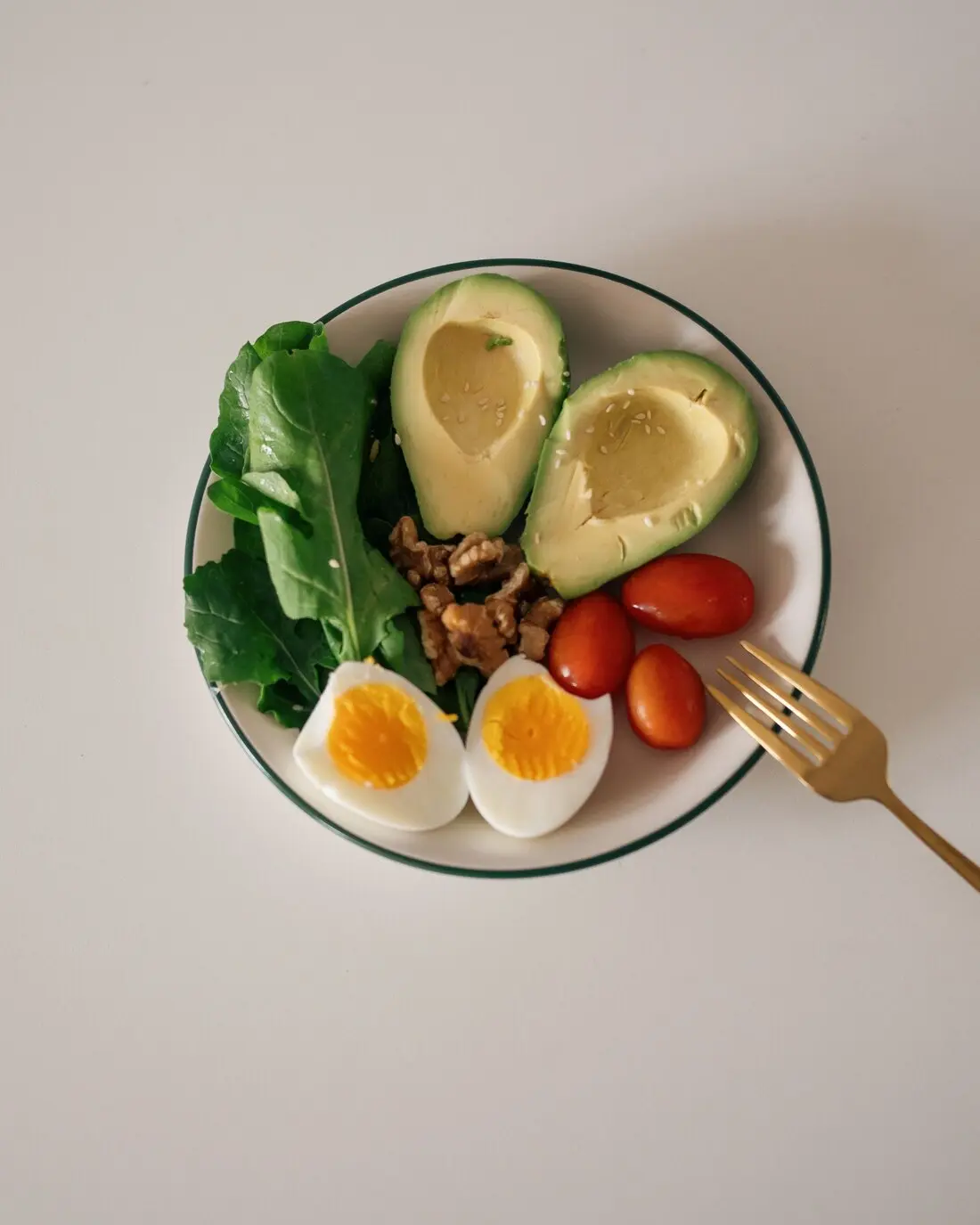
What Mediterranean-ish looks like in real life:
- Vegetables: lots, varied, colourful (raw and cooked)
- Fibre-rich carbs: beans, lentils, oats, whole grains, starchy veg
- Protein: fish, eggs, yoghurt, poultry, legumes, tofu/tempeh
- Fats: extra-virgin olive oil, nuts, seeds
- “Sometimes” foods: ultra-processed snacks and sugary drinks — less often
The IVF-friendly plate
No calorie-counting required
- ½ plate — vegetables
- ¼ plate — protein
- ¼ plate — fibre-rich carbs
- Add — olive oil + nuts & seeds
Blood-sugar stability (especially if PCOS is in the picture)
Even without PCOS, big glucose swings can drive inflammatory signalling and stress hormones. In PCOS, insulin resistance is often central — so steadying your glucose can genuinely improve the endocrine environment.
Do this (simple and effective):
- Protein at breakfast (even a small amount helps)
- Fibre at every meal
- A 10–15 minute walk after meals
- Strength training 2–3× a week
“Should I cut gluten, dairy or soy?”
For most people, only if there’s a reason — but “a reason” can be broader than a formal diagnosis.
- Gluten: there’s no blanket need for everyone to cut it, and coeliac disease or a clear intolerance is the obvious case to. That said, in certain situations — autoimmunity and some inflammatory conditions among them — a time-limited trial without gluten can genuinely help, even without a formal intolerance. It’s a personalised call, not a universal rule.
- Dairy: fine for most people who tolerate it (go for minimally sweetened options) — but, as with gluten, there are specific cases where a short, supervised break is worth trying. Better decided for your situation than applied across the board.
- Soy: normal food amounts are generally considered safe; avoid high-dose isoflavone supplements unless advised.
If cutting a food group makes your diet worse — less fibre, less protein, more stress — it isn’t a win.
Step 3 — Exercise: enough to help, not so much it backfires
Regular activity supports insulin sensitivity, cardiovascular health, mood and sleep — fertility-friendly by design. The evidence on intensity is genuinely mixed: some observational data suggest very high-volume or strenuous exercise may be associated with worse IVF outcomes in certain cohorts, while other analyses (Gaskins et al., 2016) found no overall harm and even benefit in women with a normal BMI. Moderate activity is consistently considered safe.
Exercise · a good weekly target
Aim for this each week
- 150 minutes of moderate activity (brisk walking counts)
- 2 strength sessions (full body)
If you already train hard, don’t panic — just avoid sudden extremes, under-eating and burnout. Your reproductive axis likes predictability.
Step 4 — Sleep: the quiet IVF multiplier
Sleep quality matters more than most people think. A 2025 narrative review (Pamfilio et al.) concluded that sleep quality can affect IVF outcomes — including clinical pregnancy and live birth — in some datasets, while a 2025 prospective cohort (Bariya et al., Sleep Medicine) linked poor sleep quality and abnormal sleep duration to fewer retrieved and matured oocytes and lower embryo quality. Methods vary between studies, so treat sleep as a high-value health lever rather than a magic key.

Your sleep protocol
Pick two to start
- Fixed wake time (the most important one)
- Morning daylight for 10–20 minutes
- Screens off 60 minutes before bed
- Bedroom cool and dark
- No caffeine after lunch
If you snore loudly or wake unrefreshed, ask about a sleep-apnoea assessment — especially relevant in PCOS.
For a deeper dive, see our guide on why sleep matters for fertility.
Step 5 — Stress: not a magic switch, but worth addressing anyway
Mind–body programmes reliably reduce anxiety and depression in people facing infertility (Kim et al., 2021); a benefit on actual pregnancy rates is possible but uncertain. Either way, your mental health counts in its own right.
Choose one — the one you’ll actually do:
- counselling or therapy
- gentle yoga
- a short daily breathing practice
- guided meditation (5–10 minutes counts)
- a weekly “no fertility admin” block (yes, schedule it)
No one gets an IVF medal for white-knuckling it. Our guide on stress and fertility covers what works and what doesn’t.
Step 6 — Supplements: targeted, evidence-led and boring (boring is good)
Supplements can help in specific contexts, but the evidence and product quality vary enormously. The goal is not “more.” The goal is “appropriate.”
The core (most defensible)
Prenatal + folic acid. Folic acid (at least 400 µg/day) is strongly recommended before pregnancy to reduce the risk of neural tube defects (USPSTF, 2023; ASRM, 2022). This isn’t an IVF hack — it’s basic pre-pregnancy care.
Vitamin D — test, then correct deficiency. A 2024 dose-response meta-analysis (Xu et al.) found vitamin D levels were positively associated with clinical pregnancy and live birth in ART, with a threshold around 24 ng/mL. Because the data are observational, the sensible approach is to test and treat deficiency, not megadose.
Promising (especially in defined groups)
Coenzyme Q10 (CoQ10) — particularly in diminished ovarian reserve (DOR). A 2024 meta-analysis (Lin et al.) suggests CoQ10 pretreatment may improve IVF/ICSI outcomes in women with DOR, while acknowledging small sample sizes and variable methodology. Mechanistically plausible (mitochondrial support), commonly discussed — but not universal.
Myo-inositol (PCOS). A 2025 meta-analysis of randomised trials (Akbari Sene et al.) in PCOS patients undergoing ART found myo-inositol significantly raised clinical pregnancy rates and improved ovarian-function markers. This is one of the more evidence-backed integrative options in a PCOS context.
Omega-3. A 2024 meta-analysis (Trop-Steinberg et al.) suggested omega-3 intake may improve pregnancy and fertilisation rates, though the authors caution that high heterogeneity between studies limits interpretation. Food-first (fatty fish twice a week) is excellent; a supplement is reasonable if your fish intake is low.
Maybe — but don’t self-prescribe
Melatonin. Melatonin has been studied in ART with mixed findings (Hu et al., 2020): it may help oocyte and embryo quality in some trials, but a live-birth benefit isn’t established. If you use it, treat it as clinician-guided — especially alongside other sleep aids or medications. (And please don’t stack melatonin with five other sleep supplements and then blame IVF for the daytime grogginess.)
What I don’t recommend starting on your own:
DHEA, metformin, thyroid medication, steroids, anticoagulants, high-dose vitamin A, or complicated herbal blends marketed for “egg quality.” These can be inappropriate, interact with treatment, or add risk without clear benefit. They belong in a personalised plan, not a self-assembled stack.
Preparing for IVF and not sure what’s worth doing for you?
A video consultation with Dr Helena Cepparo goes through your history and results and works out what’s worth doing in your case, with a functional approach. If scans, tests or treatment follow, she arranges them herself in central London. One doctor, from your first question onwards.
Step 7 — The male-factor bonus (Days 90–1)
Because spermatogenesis takes about 74 days (Griswold, 2016), sperm quality today is not sperm quality in ten weeks. This is one of the few areas in fertility where the biology hands you a clear “change window.”
The high-ROI male plan
Sperm take ~74 days — start now
- Stop smoking & cannabis
- Minimise alcohol
- Sleep 7–8 hours
- Avoid heat (hot tubs, saunas, laptop-on-lap)
- Mediterranean-style eating
- Exercise moderately
Antioxidants in men — possible benefit, imperfect evidence. A 2022 Cochrane review (de Ligny et al.) found low-certainty evidence that antioxidants may increase live birth in male subfertility — but the certainty is very low, and the apparent benefit disappeared when only the highest-quality trials were analysed. Translation: don’t DIY a mega-stack — discuss targeted options with a clinician. For the detail, see our evidence-based guide to male fertility supplements.
Step 8 — Environmental exposures: small changes, low downside
ASRM (2022) notes that higher exposure to certain endocrine-disrupting chemicals and air pollution may adversely affect fertility, and newer research (Liu et al., 2024) links air-pollutant mixtures with reduced IVF/ICSI clinical pregnancy rates in observational data.
A quick word on microplastics
Microplastics have officially gatecrashed the reproductive system: a 2025 study presented at ESHRE found them in most of the follicular fluid and semen samples it tested — so this is a both-of-you issue, not a him-or-her one. The human evidence is still early (finding them isn’t the same as proving they cause harm), but it isn’t nothing — a 2025 peer-reviewed analysis linked PET microplastics in semen to lower sperm motility — so a precautionary, low-downside trim is sensible.
Easy wins: don’t heat food or drinks in plastic (heat is what makes it shed), use glass, ceramic or stainless steel for anything hot, go easy on single-use bottled water, and lean toward fresh over heavily packaged food. Nobody’s achieving a plastic-free existence — but you can certainly take your foot off the accelerator for 90 days. See the peer-reviewed evidence on microplastics in human semen.
Low-effort wins
Small swaps, low downside
- Don’t microwave food in plastic — use glass or ceramic
- Reduce heavily fragranced products (air fresheners, candles, strong detergents)
- Ventilate your home; consider a HEPA filter if air quality is poor
- Wash produce; peel where needed
The 90-day IVF preparation roadmap
Copy-paste friendly — stick it on the fridge.
Days 90–61: Foundation
- Start a prenatal with folic acid
- Stop smoking and cannabis; pause alcohol
- Mediterranean-style meals most days
- Begin a sleep schedule (fixed wake time first)
- Walk daily + strength twice a week
Days 60–31: Optimise and personalise
- Post-meal walks for glucose stability
- Discuss clinician-supported labs (e.g. vitamin D; thyroid where relevant)
- If appropriate, discuss targeted supplements — not “everything”
Days 30–1: Stabilise (don’t get experimental)
- Keep the routine boring and consistent
- Avoid starting brand-new supplements late unless advised
- Protect sleep and stress support
Free download
Want this as a one-page checklist?
Get the printable 90-Day IVF Prep Checklist — every step in this guide, ready to stick on the fridge and tick off as you go. Pop in your email and it’s yours.
The bottom line
You can’t out-supplement age or embryo genetics, and lifestyle isn’t a guarantee. But you can reduce biological friction — improving metabolic health, sleep, nutrient status and sperm quality — so that the IVF you’re doing has the best possible foundation.
These principles are a solid evidence-based baseline for most people preparing for IVF — but they’re still just that: a baseline. Fertility is not one-size-fits-all. When factors like age, endometriosis, PCOS, autoimmune or inflammatory conditions, diminished ovarian reserve, male factor, recurrent loss, thyroid issues or metabolic concerns are part of the picture, the most effective preparation is usually more specific and more personalised — including what to prioritise, what to test, and which supplements are actually appropriate (and safe) for you. A good first step is knowing when to start fertility testing. And when your cycle reaches the transfer, our guide on how to prepare for your embryo transfer picks up where this one ends.
Questions patients ask me about preparing for IVF
+
The real questions I hear in clinic — answered directly, without the usual vagueness.
How long before IVF should I start preparing?+
About 90 days, or three months. A full cycle of sperm production takes roughly 74 days, and the antral phase of follicle growth takes around 60 days, so a three-month run-up is long enough for daily habits to plausibly influence the gametes involved in your cycle. If you have less time, start anyway — even a few weeks of better sleep, nutrition and no alcohol is worthwhile.
Does preparing naturally actually improve IVF success rates?+
It can help, but the effects are usually modest and the evidence varies in quality. Lifestyle changes sometimes improve intermediate markers (egg numbers, embryo quality) and sometimes clinical outcomes (pregnancy, live birth), and the benefit depends on your age, diagnosis and BMI. Think of natural preparation as reducing biological friction and optimising your baseline — not as a guarantee, and never as a substitute for proper medical treatment.
What should I eat to prepare for IVF?+
A Mediterranean-style pattern is the best-studied option: plenty of vegetables, fibre-rich carbs (beans, lentils, whole grains), fish, eggs, yoghurt, poultry and legumes, with extra-virgin olive oil, nuts and seeds, and fewer ultra-processed snacks and sugary drinks. A simple plate is half vegetables, a quarter protein and a quarter fibre-rich carbs. The evidence is promising rather than definitive, but it’s a low-risk, high-upside way to eat.
Which supplements help with IVF preparation?+
The most defensible are a prenatal with folic acid and vitamin D (tested and corrected if you’re deficient). Depending on your situation, CoQ10 (in diminished ovarian reserve), myo-inositol (in PCOS) and omega-3 may help. Avoid self-prescribing DHEA, metformin, high-dose vitamin A or complex herbal blends — these belong in a personalised, clinician-guided plan.
Should I stop drinking alcohol and caffeine before IVF?+
Ideally pause alcohol for the 90 days — an IVF cohort study linked four or more drinks a week to lower live-birth odds. Caffeine doesn’t need to be eliminated: keeping it under about 200 mg/day (roughly 1–2 coffees) and avoiding it after lunch is a sensible balance that also protects your sleep.
How can my male partner improve sperm quality before IVF?+
Because sperm take about 74 days to make, the 90-day window matters most for men. The high-value steps are: stop smoking and cannabis, minimise alcohol, sleep 7–8 hours, avoid frequent heat (hot tubs, saunas, laptop-on-lap), eat Mediterranean-style and exercise moderately. Antioxidant supplements may help in male subfertility, but the evidence is low-certainty — discuss targeted options with a clinician rather than buying a mega-stack.
Does sleep affect IVF outcomes?+
The research suggests it may. Some datasets link better sleep quality with higher clinical-pregnancy and live-birth rates, and a 2025 cohort tied poor sleep to fewer mature eggs and lower embryo quality. The methods vary, so sleep is best treated as a high-value health lever: fix your wake time, get morning daylight, and keep caffeine to the first half of the day.
Preparing for IVF and not sure what’s worth doing for you?
A video consultation with Dr Helena Cepparo goes through your history and results and works out what’s worth doing in your case, with a functional approach. If scans, tests or treatment follow, she arranges them herself in central London. One doctor, from your first question onwards.
References & Scientific Sources
+
21 sources, with links to the original papers.
- Practice Committee of the American Society for Reproductive Medicine. Tobacco or marijuana use and infertility: a committee opinion. Fertility and Sterility. 2024;121(4):589–603. doi:10.1016/j.fertnstert.2023.11.014
- Rossi BV, Berry KF, Hornstein MD, Cramer DW, Ehrlich S, Missmer SA. Effect of alcohol consumption on in vitro fertilization. Obstetrics & Gynecology. 2011;117(1):136–142. doi:10.1097/AOG.0b013e31820090e1
- American College of Obstetricians and Gynecologists, Committee on Obstetric Practice. Committee Opinion No. 462: Moderate caffeine consumption during pregnancy. Obstetrics & Gynecology. 2010;116(2 Pt 1):467–468 (reaffirmed 2020). doi:10.1097/AOG.0b013e3181eeb2a1
- Baroutis D, Kalampokas T, Katsianou E, Psarris A, Daskalakis G, Panoulis K, Eleftheriades M. The role of the Mediterranean diet in assisted reproduction: a literature review. Nutrients. 2024;16(16):2807. doi:10.3390/nu16162807
- Martín-Manchado L, Sánchez-Sansegundo M, Moya-Yeste AM, et al. Associations between adherence to a Mediterranean diet and assisted reproductive techniques outcomes: a systematic review. European Journal of Public Health. 2025;35(5):960–969. doi:10.1093/eurpub/ckaf093
- Xu C, An X, et al. Association between vitamin D level and clinical outcomes of assisted reproductive treatment: a systematic review and dose-response meta-analysis. Reproductive Sciences. 2024. PMC12041108
- Lin G, Li X, Yie SLJ, Xu L. Clinical evidence of coenzyme Q10 pretreatment for women with diminished ovarian reserve undergoing IVF/ICSI: a systematic review and meta-analysis. Annals of Medicine. 2024;56(1):2389469. PMID:39129455
- Akbari Sene A, Saeedzarandi M, Yazdizadeh M, et al. The effect of myo-inositol on assisted reproductive technology outcomes in women with polycystic ovarian syndrome: a systematic review and meta-analysis of randomized clinical trial studies. International Journal of Reproductive BioMedicine. 2025;23(5). doi:10.18502/ijrm.v23i5.19260
- Trop-Steinberg S, Gal M, Azar Y, Kilav-Levin R, Heifetz EM. Effect of omega-3 supplements or diets on fertility in women: a meta-analysis. Heliyon. 2024;10(8):e29324. PMID:38628754
- de Ligny W, Smits RM, Mackenzie-Proctor R, Jordan V, Fleischer K, de Bruin JP, Showell MG. Antioxidants for male subfertility. Cochrane Database of Systematic Reviews. 2022;5:CD007411. doi:10.1002/14651858.CD007411.pub5
- Griswold MD. Spermatogenesis: the commitment to meiosis. Physiological Reviews. 2016;96(1):1–17. doi:10.1152/physrev.00013.2015
- Williams CJ, Erickson GF. Morphology and physiology of the ovary. In: Feingold KR, et al., editors. Endotext [Internet]. South Dartmouth (MA): MDText.com; 2012. NCBI Bookshelf NBK278951
- Pamfilio LS, de Oliveira ECF, Sousa FTR, Casalechi M, Reis FM. Does sleep quality affect IVF outcomes? JBRA Assisted Reproduction. 2025. PMID:40986716
- Bariya S, Tao Y, Zhang R, Zhang M. Impact of sleep characteristics on IVF/ICSI outcomes: a prospective cohort study. Sleep Medicine. 2025;126:122–135. doi:10.1016/j.sleep.2024.11.038
- Practice Committee of the American Society for Reproductive Medicine. Optimizing natural fertility: a committee opinion. Fertility and Sterility. 2022;117(1):53–63. doi:10.1016/j.fertnstert.2021.10.007
- Liu RL, Wang T, Yao YL, et al. Association of ambient air pollutant mixtures with IVF/ICSI-ET clinical pregnancy rates during critical exposure periods. Human Reproduction Open. 2024;2024(3):hoae051. doi:10.1093/hropen/hoae051
- Gaskins AJ, Williams PL, Keller MG, et al. Maternal physical and sedentary activities in relation to reproductive outcomes following IVF. Reproductive BioMedicine Online. 2016;33(4):513–521. doi:10.1016/j.rbmo.2016.07.002
- Kim M, Kim S, Chang SB, et al. Effects of mind–body programs on infertile women: a systematic review and meta-analysis of randomized controlled trials. Asian Nursing Research. 2021;15(2):75–83. doi:10.1016/j.anr.2021.02.001
- Hu KL, Ye X, Wang S, Zhang D. Melatonin application in assisted reproductive technology: a systematic review and meta-analysis of randomized trials. Frontiers in Endocrinology. 2020;11:160. doi:10.3389/fendo.2020.00160
- U.S. Preventive Services Task Force. Folic acid supplementation to prevent neural tube defects: US Preventive Services Task Force recommendation statement. JAMA. 2023;330(5):454–459. doi:10.1001/jama.2023.12876
- Guo Y, Rong M, Fan Y, Teng X, Jin L, Zhao Y. The presence of microplastics in human semen and their associations with semen quality. Toxics. 2025;13(7):566. doi:10.3390/toxics13070566