
Swimming Upstream: An Evidence-Based Guide to Male Fertility Supplements that Actually Work

Let’s Talk About Your Swimmers
There’s a certain irony in fertility discussions: women tend to shoulder most of the attention, appointments, and interventions, while men are often handed a specimen cup and wished good luck. But here’s something worth knowing — male factors contribute to approximately 40-50% of couple infertility. That’s not a small number.
The good news is that unlike eggs (which a woman is born with and cannot create more of), sperm are continuously produced. The full cycle of sperm development takes about 74 days, which means improvements you make today can influence the quality of sperm you produce in roughly three months. That’s actually quite encouraging since some male fertility supplements can make a genuine difference, and the science behind them is stronger than you might expect.
The less-good news is that global sperm counts have declined by approximately 50% since the 1970s. Researchers are still debating the precise causes — environmental toxins, lifestyle factors, dietary changes, stress, tight underwear (yes, that’s actually been studied) — but the trend is real.
What can you do about it?
Quite a lot, as it turns out. Alongside lifestyle modifications (diet, exercise, limiting alcohol, not smoking, avoiding testicular overheating), there’s solid scientific evidence that specific male fertility supplements can meaningfully improve sperm count, motility, morphology, and DNA integrity.
Understanding Sperm Quality: A Brief Tutorial
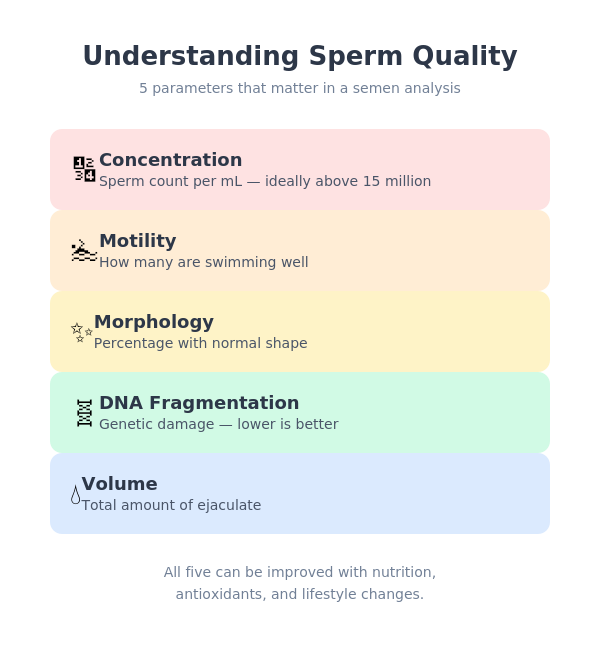
When a semen analysis comes back, several parameters matter:
- Concentration (count): How many sperm per millilitre — ideally above 15 million
- Motility: What percentage are actually swimming, and swimming well (progressive motility)
- Morphology: What percentage have normal shape — head, midpiece, and tail all correct
- DNA fragmentation: How much damage to the genetic material (lower is better)
- Volume: Total amount of ejaculate
Each of these can be influenced by nutrition, antioxidant status, and cellular health. And that’s where supplements come in.
The Core Supplements: What Actually Works
1. Coenzyme Q10 (CoQ10) — Energy for the Journey
Sperm need an enormous amount of energy to make their epic journey. The mitochondria in the sperm’s midpiece are responsible for generating that power, and CoQ10 is essential for mitochondrial function. It’s also a potent antioxidant, protecting sperm from oxidative damage.
What the research shows:
Studies have consistently demonstrated that men who supplement with CoQ10 show significant improvements in both sperm concentration and motility. One trial found that CoQ10 supplementation reversed sperm dysfunction caused by oxidative stress. The effects are dose-dependent — higher doses generally produce better results within the studied ranges.
A meta-analysis concluded that CoQ10 supplementation meaningfully improved sperm count and motility in subfertile men.
The practical bit:
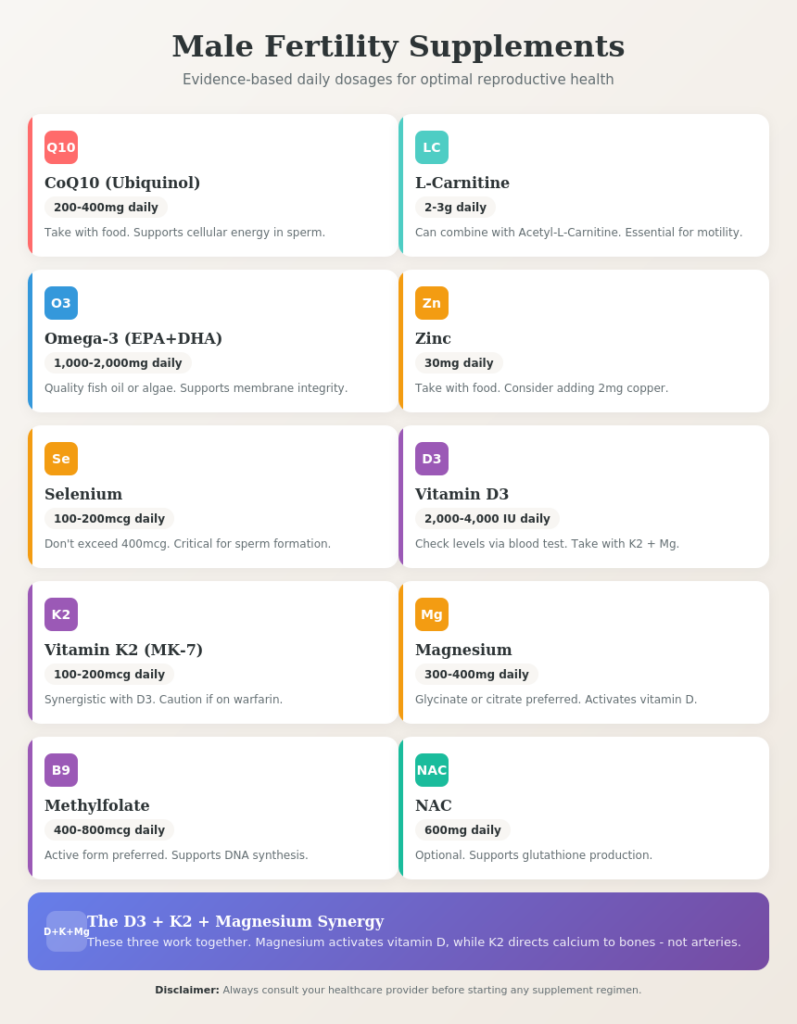
The standard recommendation is 200-400mg daily, ideally in the ubiquinol form (the active version, which is better absorbed). Take it with food containing some fat. Allow 3 months for full effects, given the sperm production cycle.
2. L-Carnitine & Acetyl-L-Carnitine — The Maturation Specialists
L-carnitine is naturally concentrated in the epididymis (the tube where sperm mature) and plays a crucial role in sperm development, energy metabolism, and motility. Think of it as the final polish on each sperm before it’s ready for action.
What the research shows:
This is one of the most well-studied supplements for male fertility. Multiple randomised controlled trials have shown that L-carnitine supplementation improves sperm concentration, total motility, progressive motility, and morphology.
One study treated men with idiopathic asthenozoospermia (poor sperm motility with no identified cause) with 3g of L-carnitine daily for 3 months. Eighty percent showed significant improvement in motility — an impressive response rate.
A systematic review and meta-analysis confirmed that carnitines significantly improve sperm motility and morphology, with the most pronounced effects in men with more severe baseline issues.
The practical bit:
Dosing typically ranges from 1-3g of L-carnitine daily, often combined with 500mg-1g of acetyl-L-carnitine. Some studies use combined formulations. Take with food, and again, expect to wait about 3 months for measurable effects.
3. Omega-3 Fatty Acids (DHA & EPA) — Building Better Membranes
Sperm membranes are rich in polyunsaturated fatty acids, particularly DHA. This isn’t just structural — membrane composition affects sperm fluidity, which influences the ability to fuse with an egg during fertilisation. Omega-3s also have anti-inflammatory effects that support overall reproductive tract health.
What the research shows:
A meta-analysis found that omega-3 supplementation significantly improved sperm motility and increased DHA concentration in seminal plasma. Infertile men consistently show lower omega-3 levels and higher omega-6:omega-3 ratios compared to fertile men.
Studies using 1-2g of EPA+DHA daily have shown improvements in sperm count, motility, and morphology, particularly in men with baseline abnormalities.
The practical bit:
Aim for 1,000-2,000mg of combined EPA and DHA daily. Quality matters — choose a purified fish oil tested for contaminants, or algae-based alternatives if you prefer plant sources. The Mediterranean diet pattern (rich in fatty fish, olive oil, vegetables) has been independently associated with better sperm quality, so dietary approaches complement supplementation nicely.
4. Zinc — The Essential Mineral
Zinc is fundamental to male reproductive function. It’s involved in testosterone production, sperm development, DNA synthesis, and maintaining sperm membrane stability. Seminal fluid contains high concentrations of zinc — for good reason.
What the research shows:
A comprehensive meta-analysis found that zinc levels in seminal plasma are significantly lower in infertile men compared to fertile controls. More importantly, zinc supplementation was shown to significantly increase semen volume, sperm motility, and the percentage of normal sperm morphology.
Zinc appears to work partly through its antioxidant properties and partly through its role in testosterone synthesis and sperm maturation.
The practical bit:
Most studies use 25-40mg of elemental zinc daily. Zinc is best taken with food to avoid nausea, and it’s worth noting that zinc and copper compete for absorption — long-term high-dose zinc supplementation should ideally be balanced with a small amount of copper (2mg) to prevent deficiency.
5. Selenium — The Antioxidant Support
Selenium is a trace element essential for the formation of selenoproteins, some of which play direct roles in sperm development and protection from oxidative damage. Selenium deficiency has been linked to impaired sperm motility and morphology.
What the research shows:
Supplementation with 100-300mcg of selenium daily for 3-11 months has been shown to improve sperm motility, concentration, and morphology. Selenium works particularly well in combination with other antioxidants like vitamin E.
One trial combining selenium, zinc, and vitamin E in infertile men showed significant improvements in sperm concentration, motility, and viability, along with reduced sperm abnormalities.
The practical bit:
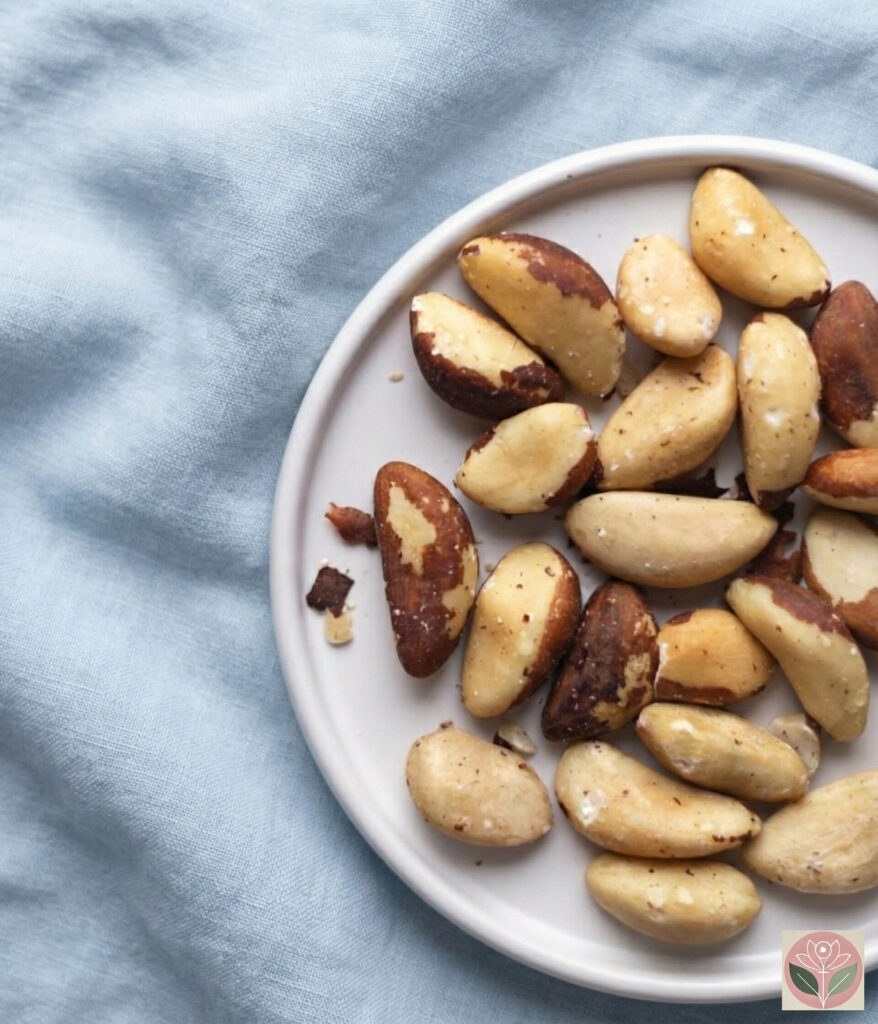
The typical dose is 100-200mcg daily. Selenium has a relatively narrow window between adequate and excessive, so don’t exceed 400mcg daily. Brazil nuts are an excellent dietary source — just 2-3 nuts provide the daily requirement.
6. Vitamin D — Not Just for Bones
Vitamin D receptors are expressed throughout the male reproductive tract, including in the testes and on sperm themselves. Research suggests vitamin D influences testosterone production, sperm motility, and possibly fertilisation capacity.
What the research shows:
Meta-analyses have found that infertile men have significantly lower vitamin D levels than fertile men, with a positive association between vitamin D status and sperm motility. Supplementation trials have demonstrated that vitamin D can significantly improve total sperm motility and progressive motility in infertile men, particularly those who were deficient at baseline.
The practical bit:
Have your levels checked — the blood test for 25-hydroxyvitamin D is simple and informative. Aim for levels above 30 ng/mL, ideally 40–60 ng/mL. This typically requires 2,000–4,000 IU of vitamin D3 daily, though your doctor may recommend more if you’re significantly deficient.
The cofactor question — why vitamin D alone isn’t enough:
Vitamin D doesn’t work in isolation. All of the enzymes that metabolize vitamin D require magnesium, which acts as a cofactor in the enzymatic reactions in the liver and kidneys. PubMed Without adequate magnesium, vitamin D may remain stored and inactive — meaning supplementation could be less effective than expected. A randomised controlled trial found that participants who received combined magnesium and vitamin D had a greater increase in serum 25-hydroxyvitamin D compared with participants receiving vitamin D alone. ScienceDirect
Vitamin K2 plays a complementary role. Vitamin D promotes the production of vitamin K-dependent proteins, which require vitamin K for carboxylation in order to function properly. PubMed Central In practical terms, vitamin D promotes calcium absorption, while vitamin K2 helps direct that calcium into bones and away from blood vessels. JoinMIDI This matters because high-dose vitamin D without adequate K2 may increase the risk of calcium depositing where you don’t want it.
Putting it together:
Consider vitamin D3 with its essential partners — magnesium (300–400 mg daily, ideally from magnesium glycinate or citrate for better absorption) and vitamin K2 as MK-7 (100–200 mcg daily). This combination helps ensure your body can actually activate and properly utilise the vitamin D you’re taking. As always, discuss supplementation with your doctor, particularly if you’re on blood-thinning medication, as vitamin K can interact with anticoagulants like warfarin.
The evidence is solid on both counts. The magnesium connection is particularly well-established — a 2018 review in the Journal of Osteopathic Medicine and a subsequent randomised trial confirmed the enzymatic dependency. The vitamin K2 synergy is supported by multiple clinical trials showing improved bone mineral density with combined supplementation.
7. Folate — DNA Integrity
Folate is essential for DNA synthesis and repair, which matters enormously when millions of sperm cells are being produced daily. Low folate status has been associated with higher sperm DNA fragmentation and lower sperm counts.
What the research shows:
Studies have found a significant negative correlation between seminal folate levels and sperm DNA damage — higher folate, lower damage. Men with the MTHFR gene variant (which affects folate metabolism) may particularly benefit from the active form, methylfolate.
Some studies have used folate in combination with zinc, showing improvements in sperm concentration and reducing abnormal sperm.
The practical bit:
Aim for 400-800mcg of methylfolate (rather than folic acid) daily. This active form is well-absorbed regardless of your genetic profile.
8. NAC (N-Acetylcysteine) — Glutathione Support
NAC is a precursor to glutathione, the body’s primary intracellular antioxidant. It’s been used medically for decades and has gained attention in male fertility for its ability to reduce oxidative stress and protect sperm DNA.
What the research shows:
NAC has been shown to improve sperm concentration, motility, and morphology in infertile men. It appears to work by boosting antioxidant capacity in seminal plasma and protecting sperm from reactive oxygen species damage.
When combined with other antioxidants, NAC has been associated with improved pregnancy rates in couples with male factor infertility.
The practical bit:
Typical dosing is 600mg daily, though some studies use higher amounts. It’s generally well-tolerated and safe for long-term use.
The Supporting Cast: Worth Considering
Vitamin E
A fat-soluble antioxidant that protects sperm membranes from oxidative damage. Often combined with selenium for synergistic effects. Dosing: 200-400 IU daily.
Vitamin C
A water-soluble antioxidant that works alongside vitamin E. May improve sperm count and motility, particularly in smokers or men with high oxidative stress. Dosing: 250-1,000mg daily.
Ashwagandha
This adaptogenic herb has shown promise in improving sperm count, motility, and testosterone levels, while also reducing cortisol (stress hormone). The evidence is growing but still emerging. Dosing: 300-600mg of root extract daily.
Not sure what applies to you as a couple?
A video consultation with Dr Helena Cepparo goes through your history and results and works out what’s worth doing in your case, with a functional approach. If scans, tests or treatment follow, she arranges them herself in central London. One doctor, from your first question onwards.
A Practical Protocol for Male Fertility Supplements
Here’s a reasonable evidence-based combination for men looking to optimise sperm parameters:
The Lifestyle Multipliers
Supplements work best alongside healthy habits. These genuinely matter:
Temperature matters: Sperm production is optimised at about 2°C below body temperature — hence the external location of the testes. Avoid prolonged laptop use on the lap, excessive hot tub/sauna sessions, and very tight underwear. Yes, really.
Diet matters: The Mediterranean dietary pattern has been consistently associated with better semen parameters. Think vegetables, fruits, whole grains, fish, olive oil, and nuts. Processed foods, excessive red meat, and sugar-sweetened beverages have been associated with poorer outcomes.
Weight matters: Obesity is linked to lower testosterone, higher oestrogen, increased testicular temperature, and poorer sperm quality. Even modest weight loss can improve parameters.
Sleep matters: Poor sleep and irregular sleep patterns are associated with lower sperm count, reduced motility, and decreased testosterone. Aim for 7–8 hours of consistent, quality sleep — your hormones (and your sperm) do much of their best work overnight.
Smoking definitely matters: Smoking damages sperm DNA, reduces count and motility, and impairs fertility. Full stop.
Alcohol in moderation: Heavy drinking affects testosterone and sperm production. Moderate consumption appears to have minimal impact, but less is generally better.
Exercise, but not extreme: Regular moderate exercise supports testosterone and fertility. Extreme endurance training (ironman-level) may temporarily reduce sperm production.
The Three-Month Rule
Here’s something to remember: the complete sperm production cycle takes approximately 74 days. This means the sperm you produce today were actually initiated about 2.5 months ago. Conversely, improvements you make today won’t fully manifest for roughly three months.
This is why fertility specialists typically recommend starting supplements and lifestyle changes at least 3 months before trying to conceive or before fertility treatments. It’s not instant gratification, but it’s biology.
Working With Your Partner’s Treatment
If your partner is preparing for IVF or IUI, optimising your sperm quality can meaningfully impact success rates. Better sperm means higher fertilisation rates, better embryo quality, reduced DNA fragmentation (associated with failed implantation and miscarriage), and more options for embryo selection.
Even if your semen analysis is “normal,” optimising can help. The reference ranges for normal are quite wide, and better within normal still matters.

When to See a Specialist
While supplements can help, they’re not a substitute for medical evaluation. Consider seeing a urologist or reproductive endocrinologist if:
- Semen analysis shows significant abnormalities
- You’ve been trying for 12 months (or 6 months if partner is over 35) without success
- You have a history of testicular problems, surgery, or injury
- You’ve had cancer treatment
- You have symptoms of low testosterone (low energy, reduced libido, erectile dysfunction)
- There’s varicocele (enlarged veins in the scrotum) on examination
The Bottom Line
Male fertility is modifiable. Unlike many things in medicine, the evidence for nutritional and lifestyle interventions in sperm quality is actually quite robust. You can’t change your genetics, but you can change your cellular environment, antioxidant status, and the conditions under which your sperm develop.
The supplements outlined here have demonstrated benefits in clinical trials. They’re safe, generally well-tolerated, and relatively inexpensive compared to fertility treatments. Starting them 3 months before conception attempts gives them time to work.
Think of it this way: you’re asking a single cell to make an extraordinary journey, penetrate an egg, and deliver half the genetic material for a new human being. Giving that cell the best possible start is just good sense.
Not sure what applies to you as a couple?
A video consultation with Dr Helena Cepparo goes through your history and results and works out what’s worth doing in your case, with a functional approach. If scans, tests or treatment follow, she arranges them herself in central London. One doctor, from your first question onwards.
References & Further reading:
- Akhigbe TM, Fidelis FB, Adekunle AO, et al. Does coenzyme Q10 improve semen quality and circulating testosterone level? A systematic review and meta-analysis of randomized controlled trials. Front Pharmacol. 2024;15:1497930. https://doi.org/10.3389/fphar.2024.1497930
- Khaw SC, Wong ZZ, Anderson R, Martins da Silva S. L-carnitine and L-acetylcarnitine supplementation for idiopathic male infertility. Reprod Fertil. 2020;1(1):67-81. https://doi.org/10.1530/RAF-20-0037
- Hosseini B, Nourmohamadi M, Hajipour S, et al. The effect of omega-3 fatty acids, EPA, and/or DHA on male infertility: A systematic review and meta-analysis. J Diet Suppl. 2019;16(2):245-256. https://doi.org/10.1080/19390211.2018.1431753
- Zhao J, Dong X, Hu X, et al. Zinc levels in seminal plasma and their correlation with male infertility: A systematic review and meta-analysis. Sci Rep. 2016;6:22386. https://doi.org/10.1038/srep22386
- Salas-Huetos A, Rosique-Esteban N, Becerra-Tomás N, et al. The effect of nutrients and dietary supplements on sperm quality parameters: A systematic review and meta-analysis of randomized clinical trials. Adv Nutr. 2018;9(6):833-848. https://doi.org/10.1093/advances/nmy057
- Tania C, Errol RPL T, Tansol C, et al. Vitamin D supplementation for improving sperm parameters in infertile men: A systematic review and meta-analysis of randomized clinical trials. Arab J Urol. 2023;21(4):207-216. https://doi.org/10.1080/2090598X.2023.2165232
- Hoek J, Steegers-Theunissen RPM, Willemsen SP, Schoenmakers S. Paternal folate status and sperm quality, pregnancy outcomes, and epigenetics: A systematic review and meta-analysis. Mol Nutr Food Res. 2020;64(9):e1900696. https://doi.org/10.1002/mnfr.201900696
- Zhou Z, Cui Y, Zhang X, Zhang Y. The role of N-acetyl-cysteine (NAC) orally daily on the sperm parameters and serum hormones in idiopathic infertile men: A systematic review and meta-analysis of randomised controlled trials. Andrologia. 2021;53(2):e13953. https://doi.org/10.1111/and.13953
- Ambiye VR, Langade D, Dongre S, et al. Clinical evaluation of the spermatogenic activity of the root extract of Ashwagandha (Withania somnifera) in oligospermic males: A pilot study. Evid Based Complement Alternat Med. 2013;2013:571420. https://doi.org/10.1155/2013/571420
de Ligny W, Smits RM, Mackenzie-Proctor R, et al. Antioxidants for male subfertility. Cochrane Database Syst Rev. 2022;5(5):CD007411. https://doi.org/10.1002/14651858.CD007411.pub5