
How to Prepare for Your Embryo Transfer: What Actually Helps
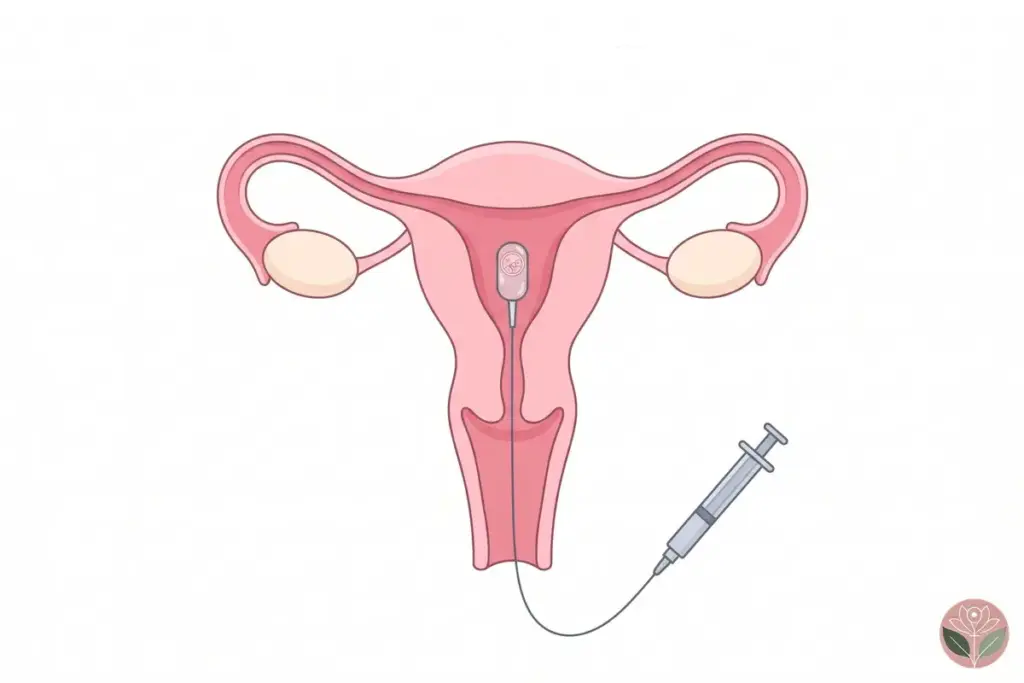
The best way to prepare for embryo transfer is surprisingly unglamorous: no smoking or alcohol, folic acid and vitamin D, good food, sleep and movement. On the day, an ultrasound-guided transfer of one good embryo matters more than anything you can buy.
Everything else either may help and won’t harm, so why not try, or costs money, carries some risk or only helps in specific situations, so talk to a doctor first.
Quick take · screenshot this
Preparing for embryo transfer in 60 seconds
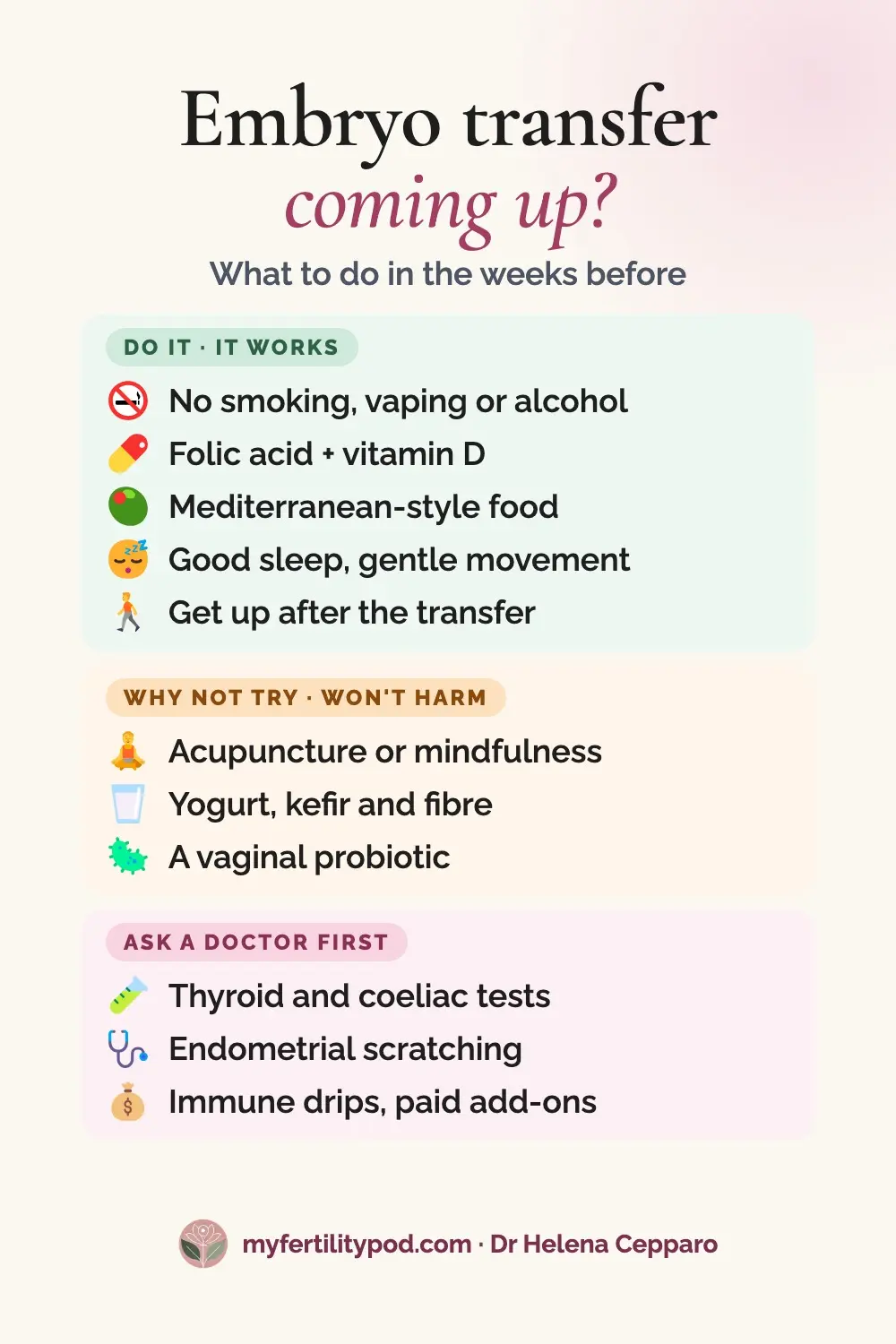
- Do it, it works: no smoking or vaping, no alcohol, folic acid and vitamin D, Mediterranean-style food, good sleep, regular movement. After the transfer, get up and carry on.
- Why not try, it won’t harm: acupuncture or mindfulness to feel calmer, fermented and prebiotic foods, a vaginal probiotic.
- Talk to a doctor first: tests such as thyroid, coeliac or clotting antibodies, endometrial scratching, and paid add-ons like immune drips or receptivity tests.
One good embryo, transferred well, into a well-prepared womb. That’s the whole recipe.
On this page: The weeks before · Inflammation, gut and microbiome · Tests worth asking about · Add-ons · Transfer day · Endometriosis, PCOS, low ovarian reserve · Checklist
What to do before embryo transfer to increase success
The steps that raise your chances are everyday ones. Smoking roughly halves the odds of a live birth (Waylen et al., 2009), and four or more drinks a week was linked to 16% fewer births (Rossi et al., 2011). Stop both now, vaping included.
- Eat the Mediterranean way. Vegetables, beans, olive oil and oily fish were linked to better IVF results (Karayiannis et al., 2018).
- Take folic acid (400 micrograms) and vitamin D (10 micrograms) daily, as NICE advises (NICE, 2026).
- Keep moving as you normally would (Rao et al., 2018).
- No new supplements in the last month. Too late to help, and not all are pregnancy-safe.

Good news: normal coffee (up to two cups), a stressful week, sex and flying haven’t been shown to lower your chances.
Why not try acupuncture? It doesn’t add births on its own (Smith et al., 2018), but across 8 trials and 2,000 women it eased IVF anxiety (Hullender Rubin et al., 2022). Gentle, drug-free and safe: if it calms you, go for it.
Does reducing inflammation or fixing your microbiome help implantation?
Possibly. It’s an exciting area, but the science is younger than the marketing.
Inflammation. No blood test tells you your womb is “inflamed”, but the everyday levers are well studied. Poor sleep raises inflammatory markers (Irwin et al., 2016), regular exercise lowers CRP (Fedewa et al., 2017), and mindfulness may lower it too: small trials, no downside (Black and Slavich, 2016).
The estrobolome. These gut bacteria recycle oestrogen. So far it’s a lab and animal story, with no human study linking it to more babies. Feeding your gut still makes sense: prebiotic foods like onions, leeks, oats and beans, and fermented foods like yogurt, kefir and kimchi, which in a Stanford trial made gut bacteria more diverse and lowered inflammatory markers (Wastyk et al., 2021). Prebiotic and probiotic capsules are harmless but barely tested in IVF (Moradi et al., 2026), so start with food.
The womb’s own microbiome. A lining rich in friendly lactobacilli is linked to better implantation (Moreno et al., 2016; 2022), but treating vaginal imbalance before IVF didn’t raise pregnancy rates (Haahr et al., 2025). Vaginal probiotics are harmless and may slightly lower miscarriage (Moradi et al., 2026). Paid microbiome tests haven’t been shown to add births, so talk to a doctor first (NICE, 2026).
Chronic endometritis. Marked inflammation of the lining matters, but in the first placebo-controlled trial antibiotics did no better than placebo (Odendaal et al., 2026). Testing makes sense after repeated unsuccessful transfers: ask a doctor.
Which tests are worth asking about before transfer?
A few simple tests can find something treatable. Ask a doctor which apply to you:
Worth asking about
Tests that can change your plan
- Thyroid (TSH). A high level should be treated. If TSH is normal but you have thyroid antibodies, thyroxine tablets don’t add births (Dhillon-Smith et al., 2019; Wang et al., 2017).
- Vitamin D, iron and B12, so any deficiency is corrected.
- Blood sugar (HbA1c or a glucose test) if you have PCOS or a higher BMI (Teede et al., 2023).
- Coeliac blood test if your infertility is unexplained or you’ve had miscarriages (Tersigni et al., 2014).
- Antiphospholipid antibodies after repeated miscarriage. This is the one immune condition where treatment clearly helps (Hamulyák et al., 2020).
Still unproven for fertility, and not cheap: NK-cell and immune panels, MTHFR gene tests, IgG food-intolerance and “leaky gut” tests. Talk to a doctor before paying.
Immune testing deserves its own article, and we’re writing it.
Transfer coming up and not sure what applies to you?
A video consultation with Dr Helena Cepparo goes through your history and results and works out what’s worth doing in your case, with a functional approach. If scans, tests or treatment follow, she arranges them herself in central London. One doctor, from your first question onwards.
Are IVF add-ons worth paying for before transfer?
Add-ons cost money, some carry risks, and most are unproven or only for specific situations. None is rated green by the UK regulator (HFEA, 2026), and NICE advises against scratching, receptivity tests and immune treatments (NICE, 2026).
- Endometrial scratch: the debate has reopened. A big 2019 trial found no difference (Lensen et al., 2019), but pooled data from 4,112 women showed about one extra baby per 26 women scratched (van Hoogenhuijze et al., 2023). Experts now ask whether it was dropped too soon, especially after repeated unsuccessful transfers (Shoham et al., 2026); Cochrane calls it uncertain (Perera et al., 2026). Worth discussing with a doctor.
- Receptivity test (ERA). A biopsy maps your “implantation window” to time the transfer. In a large trial it didn’t add births (Doyle et al., 2022), though some clinics use it after repeated unsuccessful transfers.
- Steroids. Meant to calm the immune response at implantation. In 715 women with repeated unsuccessful transfers, prednisone didn’t add births and raised early births (Sun et al., 2023), so they need a clear medical reason.
- PRP (platelet-rich plasma). Growth factors from your own blood, used for thin linings or repeated unsuccessful transfers. Small trials look encouraging, but the best one showed no clear gain (Vaidakis et al., 2024). Still being studied.
- Intralipid, hCG or G-CSF. Drips or washes to calm immune cells or “prime” the lining. Small positive studies, but reliable hCG trials showed no benefit (Zou et al., 2026). Unproven for now (ESHRE, 2023).
What to do on embryo transfer day
Arrive with a comfortably full bladder for the ultrasound, no perfume (embryology labs don’t love it), and written questions: your embryo’s grade, when to test, who to call.

Ultrasound guidance and a soft catheter raise the chance of pregnancy (Brown et al., 2016), and one embryo gives the same overall chance as two, with far fewer twins (Kamath et al., 2020). Afterwards, get up: in one trial, bed rest did worse (Gaikwad et al., 2013).
Preparing for embryo transfer with endometriosis, PCOS or low ovarian reserve
Endometriosis. No diet or supplement improves pregnancy chances (Becker et al., 2022); what helps is comfort: pain control, gentle movement, Mediterranean-style food. More in our endometriosis lifestyle guide.
PCOS. Ask for a blood sugar check (Teede et al., 2023), and don’t crash-diet: quick weight loss before IVF didn’t add babies (Mutsaerts et al., 2016). More in our PMOS guide.
Low ovarian reserve. Momentum matters: don’t postpone a transfer for a new supplement or “lining booster”. None has been shown to help, and time counts more.
Your embryo transfer checklist
Everything above on one page: save it to Pinterest or screenshot it.
Planning further ahead? Our 90-day IVF preparation guide covers the months before stimulation, and IVF explained walks through every step.
Transfer coming up and not sure what applies to you?
A video consultation with Dr Helena Cepparo goes through your history and results and works out what’s worth doing in your case, with a functional approach. If scans, tests or treatment follow, she arranges them herself in central London. One doctor, from your first question onwards.
Common questions about preparing for embryo transfer
+
The questions people ask in the week before transfer.
What should I not do before embryo transfer?+
Avoid smoking, vaping and alcohol, crash diets, and starting new supplements in the last month. You don’t need to give up a normal coffee habit, gentle exercise, sex, work or flying.
What should I eat before embryo transfer?+
A Mediterranean-style diet: vegetables, beans, wholegrains, olive oil and oily fish, plus fermented and prebiotic foods for your gut. No single food is proven to help implantation; pineapple and Brazil nuts are harmless if you enjoy them.
What should I do the day or night before my embryo transfer?+
Take your medication exactly as prescribed, eat normally, and sleep if you can. Check the time, your bladder instructions and what to bring. There’s nothing special to eat or avoid.
Can I drink coffee before embryo transfer?+
Yes, in moderation. Keeping to about two cups a day, the usual pregnancy limit, hasn’t been linked to lower IVF success.
Can I exercise before my embryo transfer?+
Yes. Keep up your usual activity, such as walking, swimming or yoga. Being active before IVF is linked to better results, so there’s no need to stop.
Should I take extra supplements before embryo transfer?+
Keep taking folic acid and vitamin D, plus anything your doctor has prescribed. Avoid starting new supplements in the last month: it’s too late to help, and not all are safe in pregnancy.
Do I need immune tests before my embryo transfer?+
For most people, the evidence isn’t there yet. NK-cell tests and the treatments sold with them haven’t been shown to add babies. The exception is antiphospholipid antibodies after repeated miscarriage, where treatment clearly helps.
Should I rest after my embryo transfer?+
No. You can get up straight away and carry on with normal life, including gentle exercise and work. Bed rest doesn’t help, and in one trial it lowered the pregnancy rate.
References & Scientific Sources
+
36 sources, with links to the original papers.
- Waylen AL, et al. Effects of cigarette smoking upon clinical outcomes of assisted reproduction: a meta-analysis. Hum Reprod Update. 2009;15:31-44. doi:10.1093/humupd/dmn046
- Rossi BV, et al. Effect of alcohol consumption on in vitro fertilization. Obstet Gynecol. 2011;117:136-142. doi:10.1097/AOG.0b013e31820090e1
- Karayiannis D, et al. Adherence to the Mediterranean diet and IVF success rate among non-obese women attempting fertility. Hum Reprod. 2018;33:494-502. doi:10.1093/humrep/dey003
- National Institute for Health and Care Excellence. Fertility problems: assessment and treatment. NICE guideline NG257. Published 31 March 2026 (replaces CG156). www.nice.org.uk/guidance/ng257
- Rao M, et al. Maternal physical activity before IVF/ICSI cycles improves clinical pregnancy rate and live birth rate: a systematic review and meta-analysis. Reprod Biol Endocrinol. 2018;16:11. doi:10.1186/s12958-018-0328-z
- Smith CA, et al. Effect of acupuncture vs sham acupuncture on live births among women undergoing in vitro fertilization: a randomized clinical trial. JAMA. 2018;319:1990-1998. doi:10.1001/jama.2018.5336
- Hullender Rubin LE, Smith CA, Schnyer RN, Tahir P, Pasch LA. Effect of acupuncture on IVF-related anxiety: a systematic review and meta-analysis. Reprod Biomed Online. 2022;45:69-80. doi:10.1016/j.rbmo.2022.02.002
- Irwin MR, Olmstead R, Carroll JE. Sleep disturbance, sleep duration, and inflammation: a systematic review and meta-analysis of cohort studies and experimental sleep deprivation. Biol Psychiatry. 2016;80:40-52. doi:10.1016/j.biopsych.2015.05.014
- Fedewa MV, Hathaway ED, Ward-Ritacco CL. Effect of exercise training on C reactive protein: a systematic review and meta-analysis of randomised and non-randomised controlled trials. Br J Sports Med. 2017;51:670-676. doi:10.1136/bjsports-2016-095999
- Black DS, Slavich GM. Mindfulness meditation and the immune system: a systematic review of randomized controlled trials. Ann N Y Acad Sci. 2016;1373:13-24. doi:10.1111/nyas.12998
- Wastyk HC, Fragiadakis GK, Perelman D, et al. Gut-microbiota-targeted diets modulate human immune status. Cell. 2021;184:4137-4153. doi:10.1016/j.cell.2021.06.019
- Moreno I, et al. Evidence that the endometrial microbiota has an effect on implantation success or failure. Am J Obstet Gynecol. 2016;215:684-703. doi:10.1016/j.ajog.2016.09.075
- Moreno I, et al. Endometrial microbiota composition is associated with reproductive outcome in infertile patients. Microbiome. 2022;10:1. doi:10.1186/s40168-021-01184-w
- Haahr T, et al. Efficacy of clindamycin and LACTIN-V for in vitro fertilization patients with vaginal dysbiosis: a randomised double-blind, placebo-controlled multicentre trial. Nat Commun. 2025;16. doi:10.1038/s41467-025-60205-6
- Moradi Y, et al. Oral and vaginal probiotics and pregnancy outcomes in women with infertility: a systematic review and meta-analysis. Obstet Gynecol. 2026. doi:10.1097/AOG.0000000000006356
- Odendaal J, et al. A double-blind multi-centre randomised placebo-controlled trial of doxycycline in women with recurrent miscarriage and chronic endometritis defined by CD138 positive stromal cells (CERM). Hum Reprod. 2026. doi:10.1093/humrep/deag133
- Dhillon-Smith RK, et al. Levothyroxine in women with thyroid peroxidase antibodies before conception (TABLET). N Engl J Med. 2019;380:1316-1325. doi:10.1056/NEJMoa1812537
- Wang H, et al. Effect of levothyroxine on miscarriage among women with normal thyroid function and thyroid autoimmunity undergoing in vitro fertilization and embryo transfer: a randomized clinical trial. JAMA. 2017;318:2190-2198. doi:10.1001/jama.2017.18249
- Teede HJ, et al. Recommendations from the 2023 International Evidence-based Guideline for the Assessment and Management of Polycystic Ovary Syndrome. Hum Reprod. 2023;38:1655-1679. doi:10.1093/humrep/dead156
- Tersigni C, et al. Celiac disease and reproductive disorders: meta-analysis of epidemiologic associations and potential pathogenic mechanisms. Hum Reprod Update. 2014;20:582-593. doi:10.1093/humupd/dmu007
- Hamulyák EN, et al. Aspirin or heparin or both for improving pregnancy outcomes in women with persistent antiphospholipid antibodies and recurrent pregnancy loss. Cochrane Database Syst Rev. 2020;5:CD012852. doi:10.1002/14651858.CD012852.pub2
- Human Fertilisation and Embryology Authority. Treatment add-ons with limited evidence (ratings page, published 16 Oct 2023, last reviewed 28 Sep 2026) and individual add-on pages (endometrial scratching, PGT-A, PRP, elective freeze-all). www.hfea.gov.uk/treatments/treatment-add-ons/
- ESHRE Add-ons working group; Lundin K, et al. Good practice recommendations on add-ons in reproductive medicine. Hum Reprod. 2023;38:2062-2104. doi:10.1093/humrep/dead184
- Lensen S, Osavlyuk D, Armstrong S, et al. A randomized trial of endometrial scratching before in vitro fertilization. N Engl J Med. 2019;380:325-334. doi:10.1056/NEJMoa1808737
- van Hoogenhuijze NE, Lahoz Casarramona G, Lensen S, et al. Endometrial scratching in women undergoing IVF/ICSI: an individual participant data meta-analysis. Hum Reprod Update. 2023;29:721-740. doi:10.1093/humupd/dmad014
- Shoham Z, Broekmans FJM, Casper RF, et al. Re-evaluating endometrial injury for IVF: was a promising approach abandoned prematurely? A critical review. Reprod Biomed Online. 2026;52(6):105371. doi:10.1016/j.rbmo.2025.105371
- Perera AK, Gan J, Afroz A, et al. Endometrial injury in women undergoing in vitro fertilisation (IVF). Cochrane Database Syst Rev. 2026;5:CD009517. doi:10.1002/14651858.CD009517.pub5
- Doyle N, et al. Effect of timing by endometrial receptivity testing vs standard timing of frozen embryo transfer on live birth in patients undergoing in vitro fertilization: a randomized clinical trial. JAMA. 2022;328:2117-2125. doi:10.1001/jama.2022.20438
- Zou H, et al. Intrauterine human chorionic gonadotropin administration before embryo transfer (IHABT): an individual participant data meta-analysis of randomized controlled trials. Hum Reprod Update. 2026. doi:10.1093/humupd/dmag009
- Sun Y, et al. Prednisone vs placebo and live birth in patients with recurrent implantation failure undergoing in vitro fertilization: a randomized clinical trial. JAMA. 2023;329:1460-1468. doi:10.1001/jama.2023.5302
- Vaidakis D, et al. Autologous platelet-rich plasma for assisted reproduction. Cochrane Database Syst Rev. 2024;4:CD013875. doi:10.1002/14651858.CD013875.pub2
- Brown J, et al. Ultrasound versus ‘clinical touch’ for catheter guidance during embryo transfer in women. Cochrane Database Syst Rev. 2016;3:CD006107. doi:10.1002/14651858.CD006107.pub4
- Kamath MS, et al. Number of embryos for transfer following in vitro fertilisation or intra-cytoplasmic sperm injection. Cochrane Database Syst Rev. 2020;8:CD003416. doi:10.1002/14651858.CD003416.pub5
- Gaikwad S, et al. Bed rest after embryo transfer negatively affects in vitro fertilization: a randomized controlled clinical trial. Fertil Steril. 2013;100:729-735. doi:10.1016/j.fertnstert.2013.05.011
- Becker CM, et al. ESHRE guideline: endometriosis. Hum Reprod Open. 2022;2022:hoac009. doi:10.1093/hropen/hoac009
- Mutsaerts MAQ, et al. Randomized trial of a lifestyle program in obese infertile women. N Engl J Med. 2016;374:1942-1953. doi:10.1056/NEJMoa1505297