Endometriosis Diet and Lifestyle Tips: What Works and What’s Hype
Quick take · screenshot this
Endometriosis advice online, fact-checked in 60 seconds
- Most food “triggers” don’t hold up. Dairy and soy are linked to lower risk, and no human study blames seed oils or gluten.
- Trans fats are the one real food signal. Citrus fruit and oily fish look friendly, but no single food is a treatment.
- Everyday “toxins” are mostly overstated. Tap water, hot showers and modern tampons don’t cause endometriosis.
- “Healing” teas, castor oil packs, seed cycling and CBD have no endometriosis evidence, or failed their only trial.
- For pain, medical care works best: hormonal treatment, anti-inflammatory painkillers, TENS, talking therapy and a specialist.
- Safe lifestyle changes are worth combining: Mediterranean-style eating, heat, movement, sleep and stress care. Give them three months and keep a diary.
No diet, tea or supplement has been shown to improve pregnancy rates with endometriosis.
Cut out dairy. Eat more ricotta. Never touch soy. Add tofu to everything. If you’ve looked up endometriosis on TikTok, Pinterest or Instagram, you’ll know the internet can’t agree with itself. So we checked more than 100 studies against 38 of the most popular tips. Here’s what held up, what didn’t, and what’s actually worth doing.
For what endometriosis is and how it affects fertility, read our full guide to endometriosis and fertility. This article is its practical companion: what to do on Monday morning.
Why is there so little proof? (It’s not what you think)
You’ll notice a pattern below: lots of “not tested”, very few “proven”. That doesn’t mean lifestyle is useless. Big trials cost millions, and most are funded by companies with a drug to sell. Nobody profits from proving that sleep or vegetables help, so those trials rarely happen. Many lifestyle measures are under-studied, not disproven.
There are good biological reasons for hope. Endometriosis is an inflammatory condition, with a disordered immune response and a lot of oxidative stress. Diet, sleep, activity, stress and body composition all shift inflammation and metabolism. It’s reasonable to think that several low-risk changes together could help. They simply haven’t been tested together.
But there’s an honest flip side. Small positive studies are the ones most likely to be wrong. When diet and supplement trials are pooled, the only consistent effect is a modest drop in period pain, and it shrinks in the best-designed trials (Meneghetti et al., 2024). Some plausible anti-inflammatory ideas were tested properly and failed. Fish-oil capsules didn’t beat placebo, and vitamin D failed in two of three trials (Nodler et al., 2020). A CBD trial was stopped for futility (Anelli et al., 2026). A trial of low-dose naltrexone collapsed at nine participants. And “harmless” isn’t always harmless: restrictive diets before pregnancy, high-dose supplements, the cost, and delaying treatment that works.
So here’s a sensible approach. Choose changes that are safe and good for your health anyway. Combine several of them. Give them about three months, and track your symptoms in a diary. Ideally, do it with personalised guidance, alongside your medical care rather than instead of it.
Endometriosis diet advice: same food, opposite advice
The same foods turn up on “avoid” lists and “eat more” lists, sometimes in the same post. Here’s where the evidence actually sits.
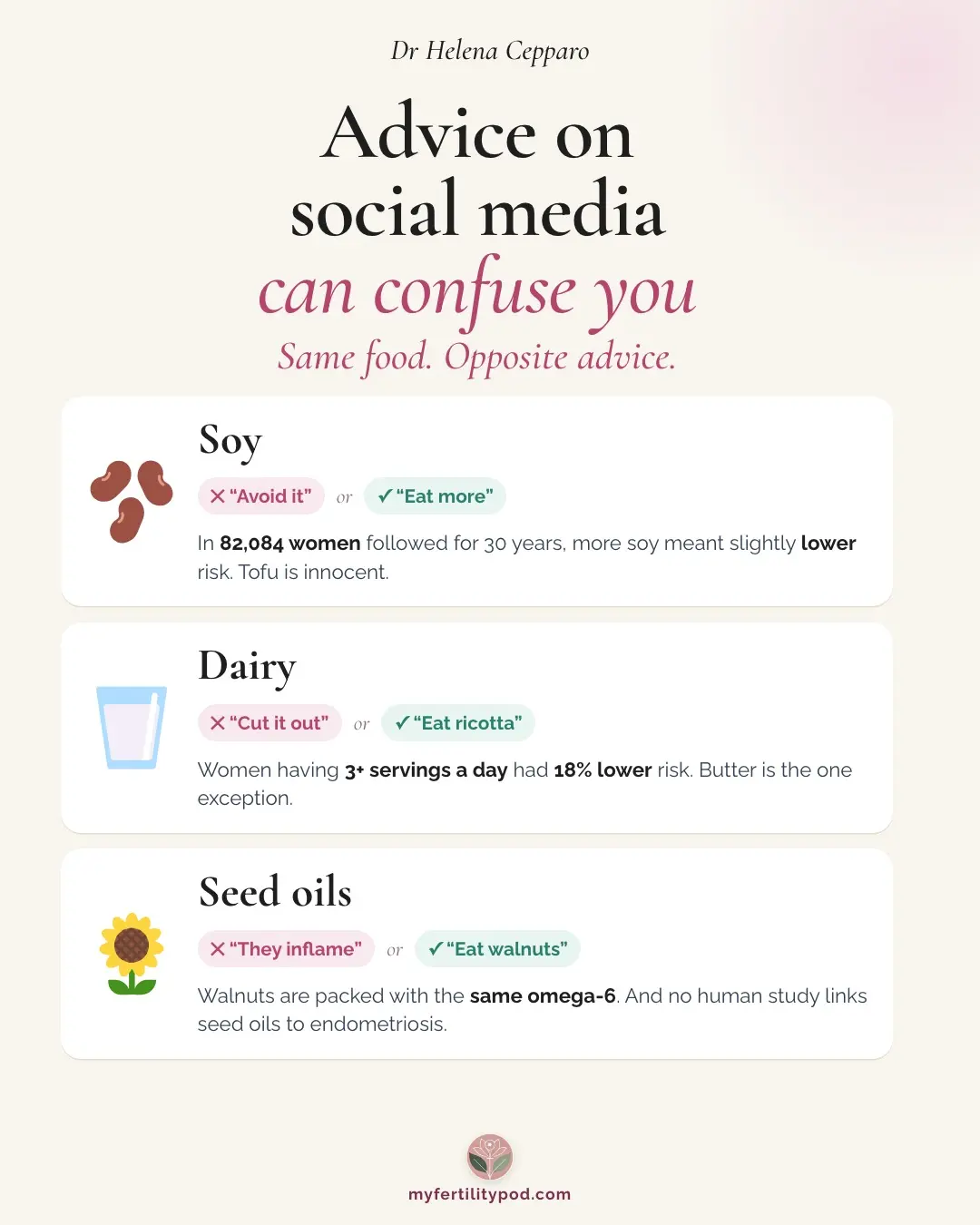
- Soy: “avoid it” or “eat more”? In 82,084 women followed for 30 years, each extra weekly serving of soy went with slightly lower risk (Mitsunami et al., 2025). Tofu is innocent.
- Dairy: “cut it out” or “eat ricotta”? Women having more than three servings a day had 18% lower risk (Harris et al., 2013). Butter was the one exception in pooled studies.
- Seed oils: “they inflame” or “eat walnuts”? Walnuts are packed with the same omega-6 fat that seed oils are blamed for. No human study links seed oils to endometriosis, and adding omega-6 didn’t raise inflammation markers in trials (Johnson and Fritsche, 2012).
The supposed endometriosis food triggers, fact-checked
Most “trigger” lists come from surveys, where people felt better after cutting something out. Between 43% and 53% reported a benefit, with no comparison group (Hearn-Yeates et al., 2025). Feeling better is real. It just doesn’t tell us why.
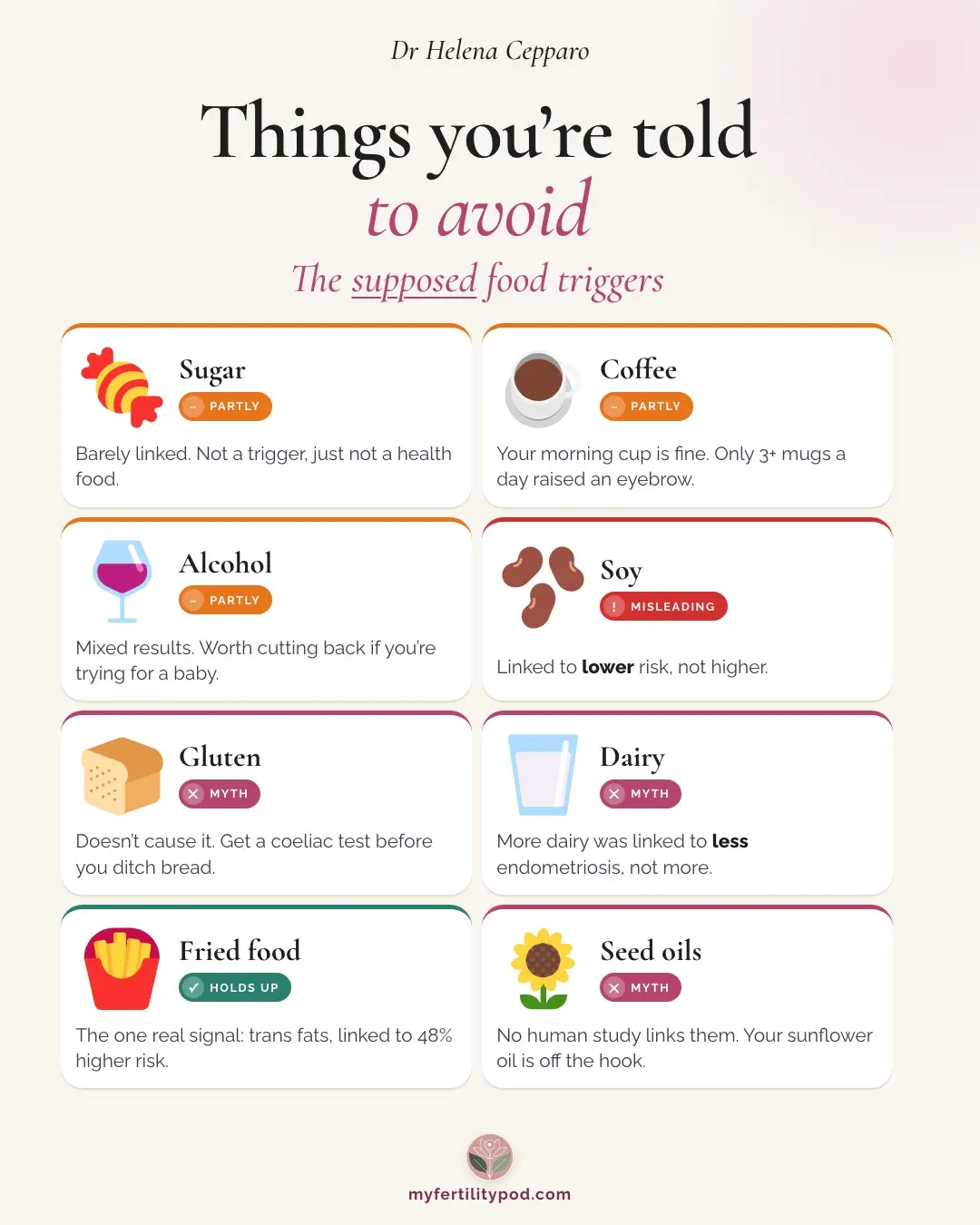
- Sugar · Partly. A diet high in fast-absorbed carbs showed only a faint link in one big study (Schwartz et al., 2022). Not a trigger, just not a health food.
- Coffee · Partly. Your morning cup is fine. Only more than about three mugs a day raised an eyebrow (Kechagias et al., 2021).
- Alcohol · Partly. The results are mixed (Li Piani et al., 2022). Worth cutting back, especially if you’re trying for a baby.
- Soy · Misleading. Linked to lower risk, not higher. “Processed soy” as a villain has never been studied.
- Gluten · Myth. In almost 82,000 women, higher gluten intake wasn’t linked to higher risk (Schwartz et al., 2022). Get a coeliac test before you ditch bread.
- Dairy · Myth. More dairy was linked to less endometriosis, not more.
- Fried food · Holds up. The one real signal: women eating the most trans fats had 48% higher risk (Missmer et al., 2010). The UK has largely removed trans fats, but go easy on fried and ultra-processed snacks.
- Seed oils · Myth. No human study links them. Your sunflower oil is off the hook.
The supposed everyday endometriosis triggers, fact-checked
Next come the household “toxins”. Some have a grain of truth. Several have none at all.
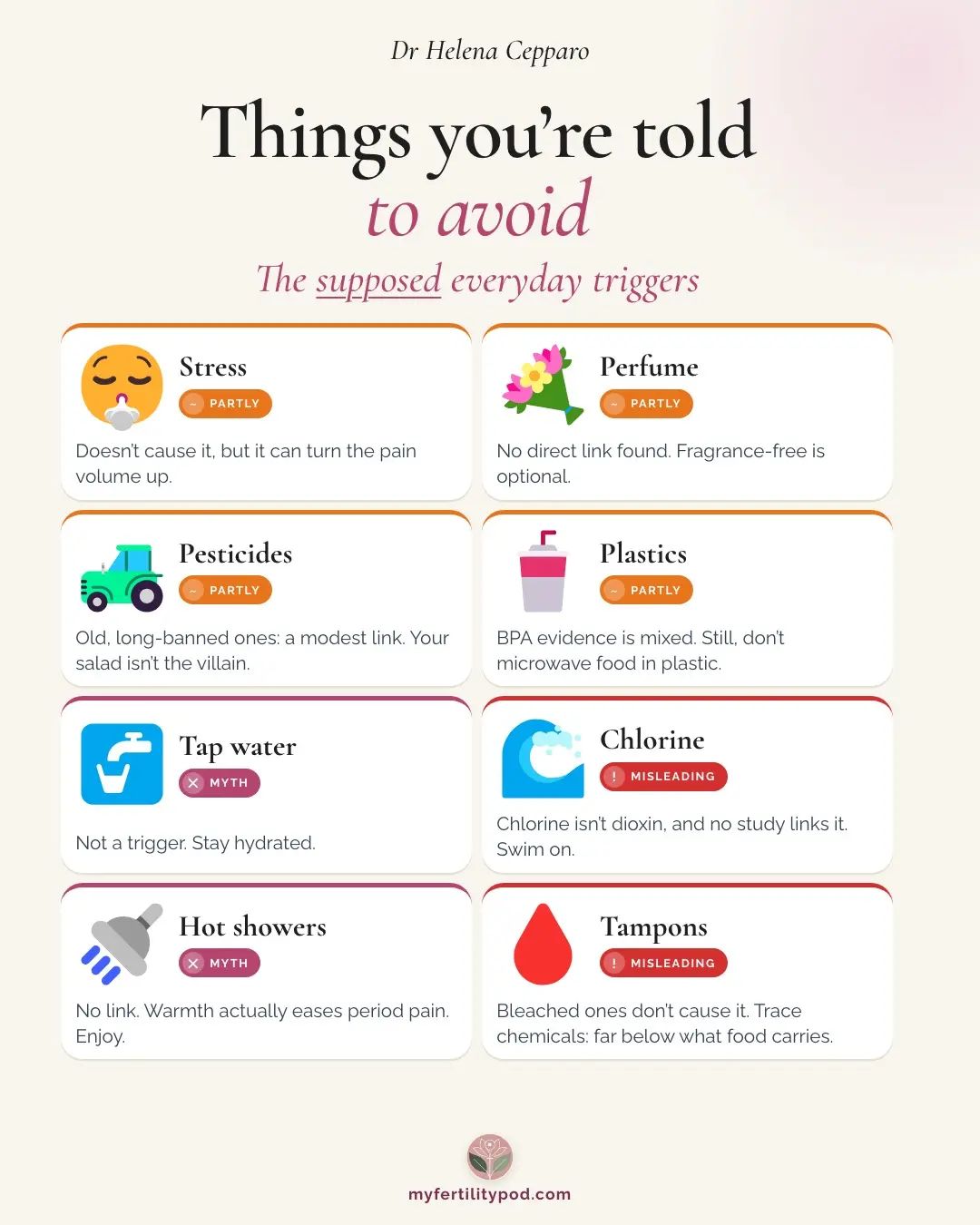
- Stress · Partly. It doesn’t cause endometriosis. But it can turn the pain volume up, and pain and stress feed each other.
- Perfume · Partly. No study has tested perfume itself, and related chemicals give patchy results. Fragrance-free is optional, not urgent.
- Pesticides · Partly. Old, long-banned pesticides show a modest link (Cano-Sancho et al., 2019). Your salad isn’t the villain, so never eat fewer vegetables to avoid residues.
- Plastics · Partly. BPA studies disagree; one pooled analysis found no significant link (Wen et al., 2019). Still, don’t microwave food in plastic.
- Tap water · Myth. Even a Swedish town with heavily contaminated drinking water saw no rise in endometriosis (Hammarstrand et al., 2021). Stay hydrated.
- Chlorine · Misleading. Chlorine in water isn’t dioxin, and no study links it to endometriosis. Swim on.
- Hot showers · Myth. No link at all. Warmth actually eases period pain (Jo and Lee, 2018). Enjoy.
- Tampons · Misleading. Modern tampons aren’t bleached with elemental chlorine. Their dioxin traces are thousands of times below what food carries (DeVito and Schecter, 2002).
Superfoods, “healing” teas and viral trends for endometriosis
Now the things you’re told to eat, drink and try. One line each, because most of them only need one.
The so-called superfoods
- Citrus fruit · Holds up. One a day was linked to 22% lower risk (Harris et al., 2018). Finally, a winner, though still not a treatment.
- Oily fish · Partly. On your plate, a good sign (Missmer et al., 2010). As fish-oil pills, no pain benefit (Nodler et al., 2020).
- Vitamin D · Partly. Fix a low level, yes. A cure for the pain, no.
- Tofu and edamame · Partly. Linked to lower risk (Mitsunami et al., 2025). Enjoy them.
- Magnesium · Partly. Good for you in food, but never tested for endometriosis.
- Vitamin B6 · Myth. No link at all in about 70,000 women (Darling et al., 2013).
- Beta-carotene · Myth. No link found. Eat your carrots for other reasons.
- Dark chocolate · Myth. Zero evidence. Eat it anyway, just not as medicine.
The “healing” teas
None has ever been tested as a tea in people with endometriosis. Enjoy the cuppa; lower the expectations.
- Chamomile · Partly. A lovely wind-down. The one endometriosis study used capsules, and its numbers look shaky.
- Green tea · Partly. It shrank lesions in hamsters and mice. The human trial finished in 2022, then went quiet.
- Ginger · Partly. Capsules ease ordinary period pain. Not yet tested in endometriosis.
- Dandelion · Misleading. Your liver doesn’t need a detox. Skip it if you have liver or gallbladder problems.
- Turmeric · Myth. A cup holds very little curcumin, and you absorb even less. Even curcumin capsules failed in a placebo-controlled trial (Gudarzi et al., 2024).
- Peppermint · Partly. Peppermint oil capsules help gut cramps. The tea is untested.
The viral trends
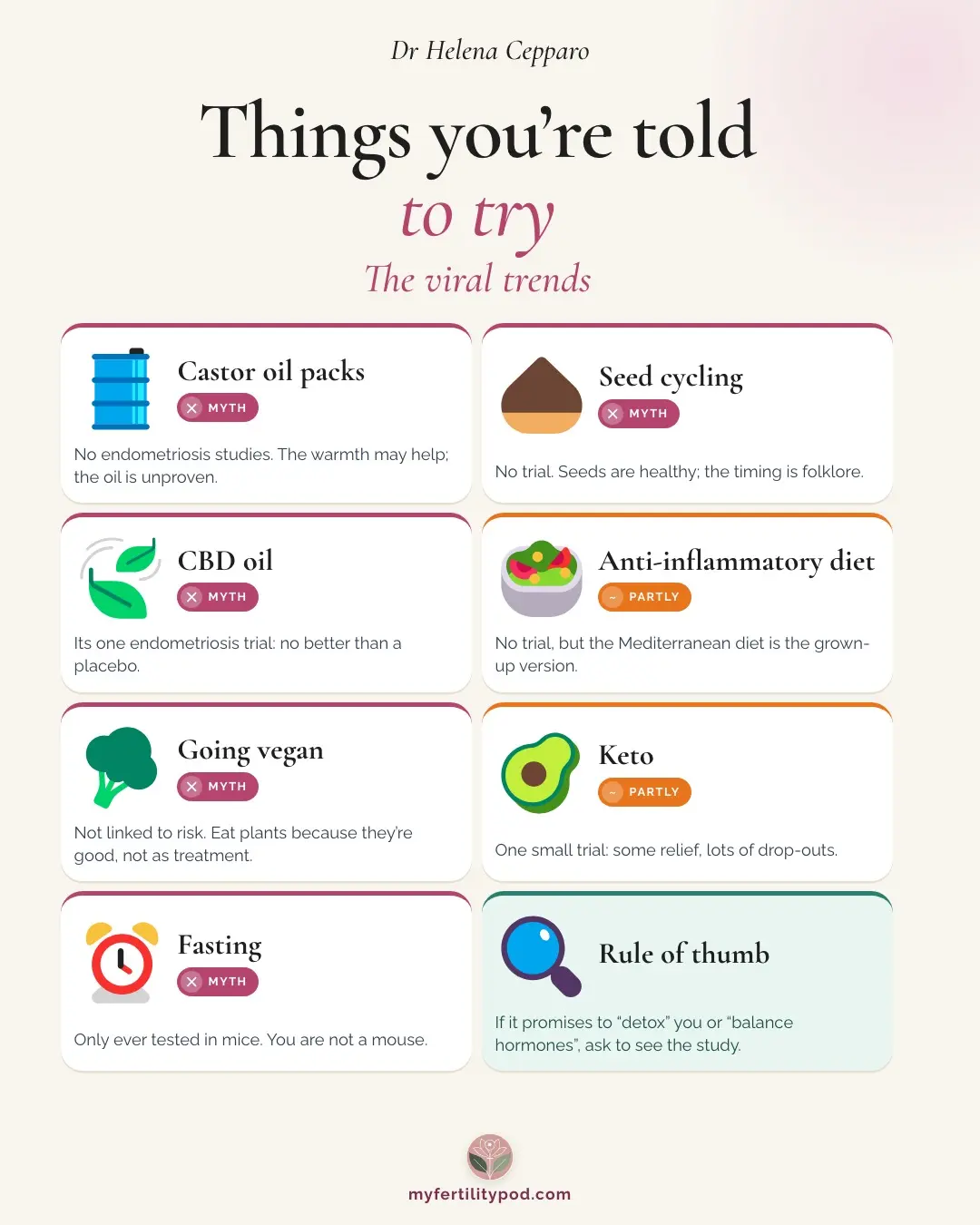
- Castor oil packs · Myth. No endometriosis studies at all. The warmth may help; the oil is unproven.
- Seed cycling · Myth. No trial. Seeds are healthy; the timing is folklore.
- CBD oil · Myth. Its one endometriosis trial: no better than a placebo (Anelli et al., 2026).
- Anti-inflammatory diet · Partly. No trial under that name, but Mediterranean-style eating is the grown-up version.
- Going vegan · Myth. Plant-based eating wasn’t linked to risk (Mitsunami et al., 2026). Eat plants because they’re good, not as treatment.
- Keto · Partly. One small trial: some relief, lots of drop-outs (Naeini et al., 2025).
- Fasting · Myth. Only ever tested in mice. You are not a mouse.
Yoga for endometriosis
Partly: worth a go, just not a cure. In one small trial, yoga twice a week for eight weeks meant less daily pain and better wellbeing (Gonçalves et al., 2017). No study has ever tested a single pose. In clinical experience, child’s pose, happy baby and a deep squat can help a tight pelvic floor let go. Go gently with deep twists and cobra, especially after surgery.
Endometriosis and not sure what’s worth trying for you?
A video consultation with Dr Helena Cepparo goes through your history and results and works out what’s worth doing in your case, with a functional approach. If scans, tests or treatment follow, she arranges them herself in central London. One doctor, from your first question onwards.
What actually helps with endometriosis
Here’s the honest sort, in three tiers. Lifestyle changes can ease pain, calm the gut and help you sleep and cope. They can’t replace a diagnosis or a treatment plan. And no diet, tea, pose or supplement has been shown to improve your chance of pregnancy with endometriosis (Becker et al., 2022).
Proven to help
Tier 1 · trials or guideline support
Proven to help with endometriosis
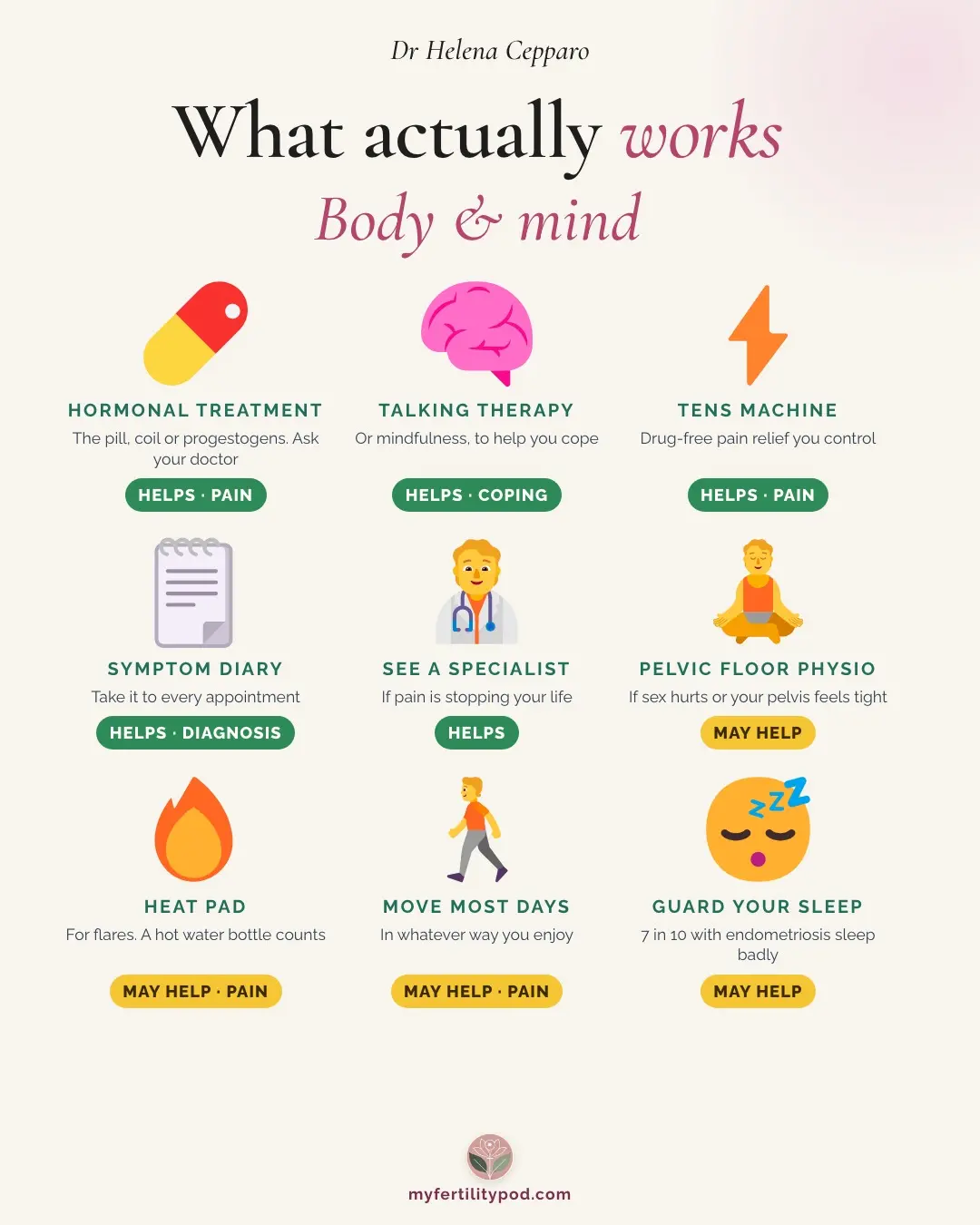
- Hormonal treatment. The pill, progestogens or a hormonal coil are the most effective way to control pain. After surgery, 18–24 months of the coil or the pill cuts the chance of it coming back, but only while you take it (Becker et al., 2022).
- Anti-inflammatory painkillers. Ibuprofen-type drugs, taken early in a flare, are guideline-backed, though the trial data are thin (Brown et al., 2017).
- A TENS machine. Used alongside hormonal treatment, it reduced pelvic pain in a small trial (Mira et al., 2020). Drug-free, and you control it.
- Talking therapy or mindfulness. These improved coping and quality of life, though not pain scores (Hansen et al., 2023). Worth having for that alone.
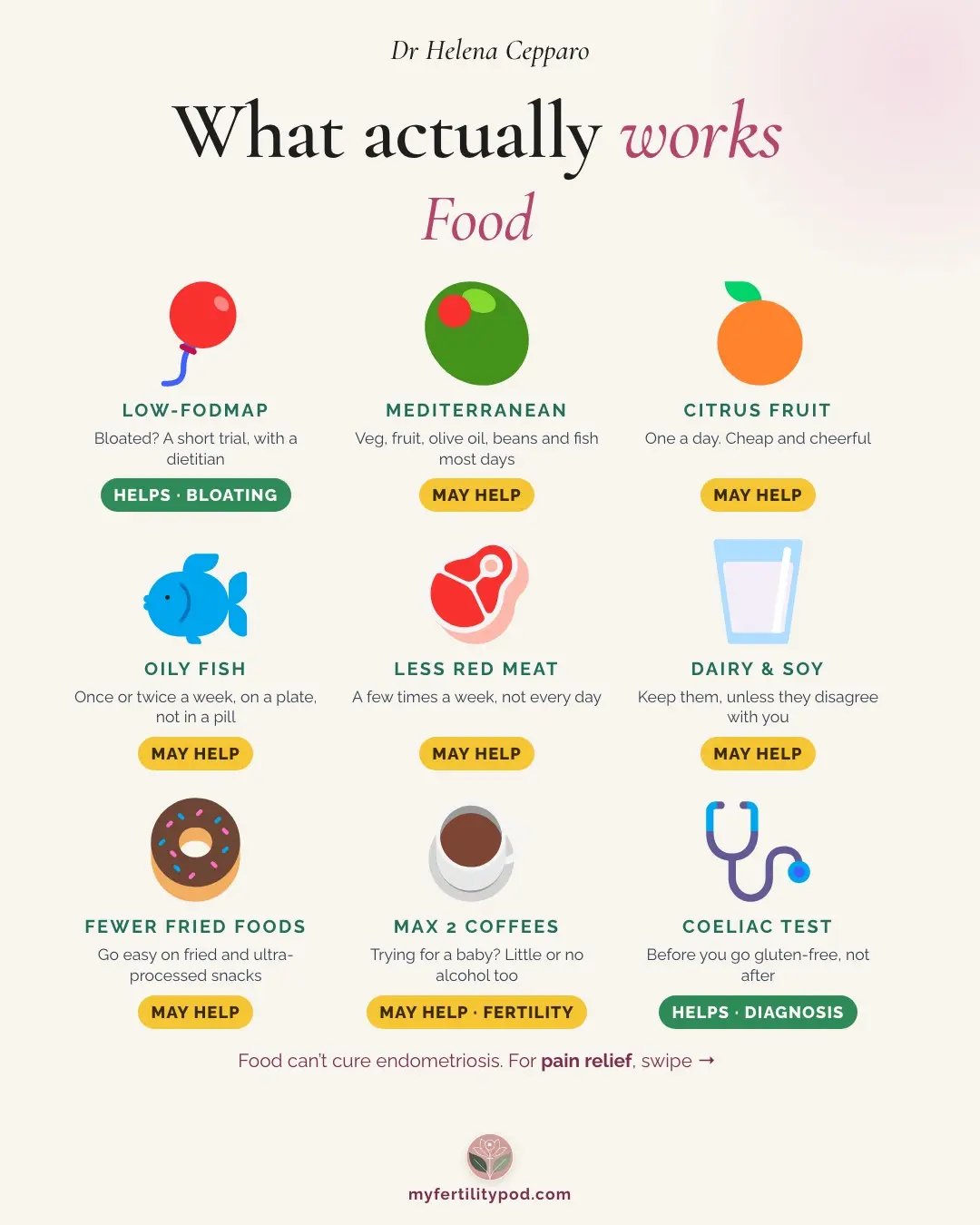
- A short, dietitian-led low-FODMAP diet for bloating. Over 28 days, bowel symptoms improved in 60% of women, against 26% on a comparison diet (Varney et al., 2025). It treats the gut, not the lesions.
- A symptom diary and a specialist. Take the diary to every appointment. See a specialist if pain is stopping your life.
Only hormonal treatment has been shown to slow endometriosis coming back. Nothing in lifestyle has.
What about surgery? Keyhole surgery still has a real place. In the UK, NICE recommends offering it to remove endometriosis when you’re trying to conceive naturally, and for pain that other treatments don’t control (NICE, 2024). Ovarian cysts (endometriomas) need more care: removing one can lower your egg reserve (Raffi et al., 2012), so it isn’t automatic, and gentler drainage, or freezing eggs first, may be discussed (Cobo et al., 2020). Our endometriosis and fertility guide has the details.
Reasonable to try: low risk, under-studied, not disproven
Tier 2 · safe, sensible, worth combining
Reasonable to try with endometriosis
- Mediterranean-style eating. Vegetables, fruit, olive oil, beans and oily fish most days, with less red meat and fewer fried foods. A healthy eating pattern was linked to 13% lower risk (Dougan et al., 2024), and it’s safe in pregnancy.
- Keep dairy and soy, unless they genuinely disagree with you.
- Heat for flares. A heat pad beat painkillers for ordinary period pain in small trials (Jo and Lee, 2018). A hot water bottle counts.
- Movement most days, in whatever way you enjoy. Build up gently, as some people flare.
- Pelvic floor physiotherapy, especially if sex hurts or your pelvis feels tight. In deep endometriosis it improved bladder, bowel and sexual function (Del Forno et al., 2023).
- Protected sleep. Seven in ten women with endometriosis sleep badly (Zhang et al., 2024).
- Stress care. Breathing, pacing, therapy: whatever calms your nervous system.
- Melatonin, or vitamins C and E, for pain. Melatonin 10 mg cut daily pain by about 40% in one small trial (Schwertner et al., 2013), though 20 mg didn’t help in another (Söderman et al., 2023). Vitamins C plus E helped in a small trial (Santanam et al., 2013). Check with your doctor, and stop high doses once you’re trying to conceive. Our full supplements guide is coming next.
- Acupuncture, short term. It eased period pain at 12 weeks, but not at 24 (Li et al., 2023).
- Trying for a baby? Stick to two coffees a day at most, and little or no alcohol.
- Correct deficiencies. Check iron and ferritin if your periods are heavy, and your vitamin D; take folic acid before conception. Good medicine, not an endometriosis cure.
Pick several, give them about three months, and track your symptoms. That’s how you find your combination.
Skip it: tested and failed, or cost without benefit
- CBD oil. Its placebo-controlled trial was stopped for futility (Anelli et al., 2026).
- Detoxes and “healing” teas as treatment. No trial of a commercial detox programme exists (Klein and Kiat, 2015). Lovely drinks, not medicine.
- Going gluten-free or dairy-free without a reason. There’s no controlled evidence (van Haaps et al., 2024). Get a coeliac test first, while you’re still eating gluten.
- Stool tests with “endo protocols”, and antibiotics or probiotics as treatment. A 2023 study found Fusobacterium in the womb lining of 64% of women with endometriosis (Muraoka et al., 2023). A US team looked in 92 women and found no difference (Graciano-España et al., 2025). A scoping review of 36 studies found no consistent microbiome “signature” (Facciotti et al., 2025).
- Fertility supplement stacks. A 2026 review of vitamin trials found no increase in pregnancy rates (Tsokkou et al., 2026). NAC’s viral “39 out of 52 pregnancies” comes from studies with no comparison group (Anastasi et al., 2023). Our evidence-graded supplements guide is coming next.
- “New endo drugs” bought online. Dichloroacetate has feasibility data only (Whitaker et al., 2025). Metformin has no placebo-controlled trial. Low-dose naltrexone’s only trial collapsed at nine participants.
- Anything promising to “cure” or “reverse” endometriosis. Nothing does, yet. Anyone saying otherwise is selling something.
When to get help with endometriosis
Period pain that stops your life is not normal, whatever you’ve been told. In the UK, the average wait for a diagnosis is still over nine years (Endometriosis UK, 2026). Scans come first now: an expert ultrasound or MRI, not automatically keyhole surgery (Becker et al., 2022). Bring your symptom diary and ask for a specialist.
Want the one-page version? Download our free endometriosis cheat sheet: what works, what doesn’t, and a checklist for your next appointment.
Which combination suits you, with your symptoms, your treatment and your plans for a family, is exactly what personalised guidance is for.
Endometriosis and not sure what’s worth trying for you?
A video consultation with Dr Helena Cepparo goes through your history and results and works out what’s worth doing in your case, with a functional approach. If scans, tests or treatment follow, she arranges them herself in central London. One doctor, from your first question onwards.
Common questions about endometriosis diet and lifestyle
+
The questions people ask most after an evening of scrolling.
Does diet cause endometriosis?+
No. No food has been proven to cause endometriosis, and nothing you ate gave it to you. A healthy eating pattern is linked to slightly lower risk and trans fats to higher, but these are links, not causes.
Should I go gluten-free for endometriosis?+
Not without a reason. Gluten isn’t linked to higher risk, and no controlled trial supports a gluten-free diet. Get a coeliac blood test first, while you’re still eating gluten.
Do supplements help endometriosis?+
A few may ease pain: melatonin and vitamins C plus E had small positive trials. Fish oil, vitamin D and CBD largely failed, and no supplement has been shown to improve pregnancy rates.
Is there anything natural that works for endometriosis?+
Yes, for symptoms: heat, regular movement, pelvic floor physiotherapy, talking therapy, a TENS machine and a short low-FODMAP diet for bloating. They work best combined, and alongside medical care.
Can lifestyle changes cure endometriosis?+
No. They can ease pain, calm the gut and help you sleep and cope. Only hormonal treatment has been shown to slow endometriosis coming back, and only while you take it.
References & Scientific Sources
+
46 sources, with links to the original papers.
- Nodler JL, DiVasta AD, Vitonis AF, et al. Supplementation with vitamin D or ω-3 fatty acids in adolescent girls and young women with endometriosis (SAGE): a double-blind, randomized, placebo-controlled trial. American Journal of Clinical Nutrition. 2020;112(1):229–236. doi:10.1093/ajcn/nqaa096
- Anelli GB, Ratochinski R, Oliveira IGC, et al. Cannabidiol-enriched extract oil for postoperative management of chronic pelvic pain secondary to endometriosis: a randomized clinical trial — DREAMLAND study. Cannabis and Cannabinoid Research. 2026; online ahead of print. doi:10.1177/25785125251413989
- Mitsunami M, Soria-Contreras DC, Ortiz-Panozo E, et al. Soy consumption and the risk of laparoscopically confirmed endometriosis in a prospective cohort study. Fertility and Sterility. 2025;124(5 Pt 2):1061–1070. doi:10.1016/j.fertnstert.2025.06.028
- Harris HR, Chavarro JE, Malspeis S, Willett WC, Missmer SA. Dairy-food, calcium, magnesium, and vitamin D intake and endometriosis: a prospective cohort study. American Journal of Epidemiology. 2013;177(5):420–430. doi:10.1093/aje/kws247
- Johnson GH, Fritsche K. Effect of dietary linoleic acid on markers of inflammation in healthy persons: a systematic review of randomized controlled trials. Journal of the Academy of Nutrition and Dietetics. 2012;112(7):1029–1041. doi:10.1016/j.jand.2012.03.029
- Hearn-Yeates F, Edgley K, Horne AW, O’Mahony SM, Saunders PTK. Dietary modification and supplement use for endometriosis pain. JAMA Network Open. 2025;8(3):e253152. doi:10.1001/jamanetworkopen.2025.3152
- Schwartz NRM, Afeiche MC, Terry KL, et al. Glycemic index, glycemic load, fiber, and gluten intake and risk of laparoscopically confirmed endometriosis in premenopausal women. Journal of Nutrition. 2022;152(9):2088–2096. doi:10.1093/jn/nxac107
- Kechagias KS, Katsikas Triantafyllidis K, Kyriakidou M, et al. The relation between caffeine consumption and endometriosis: an updated systematic review and meta-analysis. Nutrients. 2021;13(10):3457. doi:10.3390/nu13103457
- Li Piani L, Chiaffarino F, Cipriani S, Viganò P, Somigliana E, Parazzini F. A systematic review and meta-analysis on alcohol consumption and risk of endometriosis: an update from 2012. Scientific Reports. 2022;12(1):19122. doi:10.1038/s41598-022-21173-9
- Missmer SA, Chavarro JE, Malspeis S, et al. A prospective study of dietary fat consumption and endometriosis risk. Human Reproduction. 2010;25(6):1528–1535. doi:10.1093/humrep/deq044
- Cano-Sancho G, Ploteau S, Matta K, et al. Human epidemiological evidence about the associations between exposure to organochlorine chemicals and endometriosis: systematic review and meta-analysis. Environment International. 2019;123:209–223. doi:10.1016/j.envint.2018.11.065
- Wen X, Xiong Y, Qu X, et al. The risk of endometriosis after exposure to endocrine-disrupting chemicals: a meta-analysis of 30 epidemiology studies. Gynecological Endocrinology. 2019;35(8):645–650. doi:10.1080/09513590.2019.1590546
- Hammarstrand S, Jakobsson K, Andersson E, et al. Perfluoroalkyl substances (PFAS) in drinking water and risk for polycystic ovarian syndrome, uterine leiomyoma, and endometriosis: a Swedish cohort study. Environment International. 2021;157:106819. doi:10.1016/j.envint.2021.106819
- Jo J, Lee SH. Heat therapy for primary dysmenorrhea: a systematic review and meta-analysis of its effects on pain relief and quality of life. Scientific Reports. 2018;8(1):16252. doi:10.1038/s41598-018-34303-z
- DeVito MJ, Schecter A. Exposure assessment to dioxins from the use of tampons and diapers. Environmental Health Perspectives. 2002;110(1):23–28. doi:10.1289/ehp.0211023
- Harris HR, Eke AC, Chavarro JE, Missmer SA. Fruit and vegetable consumption and risk of endometriosis. Human Reproduction. 2018;33(4):715–727. doi:10.1093/humrep/dey014
- Darling AM, Chavarro JE, Malspeis S, Harris HR, Missmer SA. A prospective cohort study of vitamins B, C, E, and multivitamin intake and endometriosis. Journal of Endometriosis. 2013;5(1):17–26. doi:10.5301/je.5000151
- Gudarzi R, Shabani F, Mohammad-Alizadeh-Charandabi S, et al. Effect of curcumin on painful symptoms of endometriosis: a triple-blind randomized controlled trial. Phytotherapy Research. 2024;38(1):147–155. doi:10.1002/ptr.8030
- Mitsunami M, Soria-Contreras DC, Harris HR, Missmer SA, Chavarro JE, et al. Greater intake of plant-based foods is unrelated to the risk of endometriosis among predominantly omnivorous women in the United States. Journal of Nutrition. 2026;156(9):101737. doi:10.1016/j.tjnut.2026.101737
- Naeini F, Tanha FD, Mahmoudi M, Ansar H, Hosseinzadeh-Attar MJ. MCT-modified ketogenic diet as an adjunct to standard treatment regimen could alleviate clinical symptoms in women with endometriosis. BMC Women’s Health. 2025;25(1):232. doi:10.1186/s12905-025-03798-w
- Gonçalves AV, Barros NF, Bahamondes L. The practice of Hatha yoga for the treatment of pain associated with endometriosis. Journal of Alternative and Complementary Medicine. 2017;23(1):45–52. doi:10.1089/acm.2015.0343
- Becker CM, Bokor A, Heikinheimo O, et al; ESHRE Endometriosis Guideline Group. ESHRE guideline: endometriosis. Human Reproduction Open. 2022;2022(2):hoac009. doi:10.1093/hropen/hoac009
- Brown J, Crawford TJ, Allen C, Hopewell S, Prentice A. Nonsteroidal anti-inflammatory drugs for pain in women with endometriosis. Cochrane Database of Systematic Reviews. 2017;1:CD004753. doi:10.1002/14651858.CD004753.pub4
- Mira TAA, Yela DA, Podgaec S, Baracat EC, Benetti-Pinto CL. Hormonal treatment isolated versus hormonal treatment associated with electrotherapy for pelvic pain control in deep endometriosis: randomized clinical trial. European Journal of Obstetrics & Gynecology and Reproductive Biology. 2020;255:134–141. doi:10.1016/j.ejogrb.2020.10.018
- Hansen KE, Brandsborg B, Kesmodel US, et al. Psychological interventions improve quality of life despite persistent pain in endometriosis: results of a 3-armed randomized controlled trial. Quality of Life Research. 2023;32(6):1727–1744. doi:10.1007/s11136-023-03346-9
- Varney JE, So D, Gibson PR, et al. Clinical trial: effect of a 28-day low FODMAP diet on gastrointestinal symptoms associated with endometriosis (EndoFOD) — a randomised, controlled crossover feeding study. Alimentary Pharmacology & Therapeutics. 2025;61(12):1889–1903. doi:10.1111/apt.70161
- Raffi F, Metwally M, Amer S. The impact of excision of ovarian endometrioma on ovarian reserve: a systematic review and meta-analysis. Journal of Clinical Endocrinology & Metabolism. 2012;97(9):3146–3154. doi:10.1210/jc.2012-1558
- Cobo A, Giles J, Paolelli S, Pellicer A, Remohí J, García-Velasco JA. Oocyte vitrification for fertility preservation in women with endometriosis: an observational study. Fertility and Sterility. 2020;113(4):836–844. doi:10.1016/j.fertnstert.2019.11.017
- Dougan MM, Fest S, Cushing-Haugen K, et al. A prospective study of dietary patterns and the incidence of endometriosis diagnosis. American Journal of Obstetrics and Gynecology. 2024;231(4):443.e1–443.e10. doi:10.1016/j.ajog.2024.04.030
- Del Forno S, Cocchi L, Arena A, et al. Effects of pelvic floor muscle physiotherapy on urinary, bowel, and sexual functions in women with deep infiltrating endometriosis: a randomized controlled trial. Medicina (Kaunas). 2023;60(1):67. doi:10.3390/medicina60010067
- Zhang Y, Liu H, Feng C, Yang Y, Cui L. Prevalence of sleep disturbances in endometriosis patients: a systematic review and meta-analysis. Frontiers in Psychiatry. 2024;15:1405320. doi:10.3389/fpsyt.2024.1405320
- Schwertner A, Conceição dos Santos CC, Costa GD, et al. Efficacy of melatonin in the treatment of endometriosis: a phase II, randomized, double-blind, placebo-controlled trial. Pain. 2013;154(6):874–881. doi:10.1016/j.pain.2013.02.025
- Söderman L, Böttiger Y, Edlund M, Järnbert-Pettersson H, Marions L. Adjuvant use of melatonin for pain management in endometriosis-associated pelvic pain: a randomized double-blinded, placebo-controlled trial. PLoS One. 2023;18(6):e0286182. doi:10.1371/journal.pone.0286182
- Santanam N, Kavtaradze N, Murphy A, Dominguez C, Parthasarathy S. Antioxidant supplementation reduces endometriosis-related pelvic pain in humans. Translational Research. 2013;161(3):189–195. doi:10.1016/j.trsl.2012.05.001
- Li PS, Peng XM, Niu XX, et al. Efficacy of acupuncture for endometriosis-associated pain: a multicenter randomized single-blind placebo-controlled trial. Fertility and Sterility. 2023;119(5):815–823. doi:10.1016/j.fertnstert.2023.01.034
- Klein AV, Kiat H. Detox diets for toxin elimination and weight management: a critical review of the evidence. Journal of Human Nutrition and Dietetics. 2015;28(6):675–686. doi:10.1111/jhn.12286
- van Haaps AP, Brouns F, Schreurs AMF, Keszthelyi D, Maas JWM, Mijatovic V. A gluten-free diet for endometriosis patients lacks evidence to recommend it. AJOG Global Reports. 2024;4(3):100369. doi:10.1016/j.xagr.2024.100369
- Muraoka A, Suzuki M, Hamaguchi T, et al. Fusobacterium infection facilitates the development of endometriosis through the phenotypic transition of endometrial fibroblasts. Science Translational Medicine. 2023;15(700):eadd1531. doi:10.1126/scitranslmed.add1531
- Graciano-España MC, Barnhart K, Gonzalez-Monfort M, et al. Fusobacterium nucleatum is not significantly present in eutopic endometrium from patients with minimal-mild and moderate-severe endometriosis. Fertility and Sterility. 2025;124(5 Pt 2):1071–1081. doi:10.1016/j.fertnstert.2025.06.035
- Facciotti F, Di Stefano G, Maragno P, et al. Microbiome dysbiosis and endometriosis: a systematic scoping review of current literature and knowledge gaps. Human Reproduction Open. 2025;2025(4):hoaf061. doi:10.1093/hropen/hoaf061
- Tsokkou S, et al. Therapeutic effects of vitamins in endometriosis patients: a systematic review of randomized controlled trials. International Journal of Molecular Sciences. 2026;27(3):1476. doi:10.3390/ijms27031476
- Anastasi E, Scaramuzzino S, Viscardi MF, et al. Efficacy of N-acetylcysteine on endometriosis-related pain, size reduction of ovarian endometriomas, and fertility outcomes. International Journal of Environmental Research and Public Health. 2023;20(6):4686. doi:10.3390/ijerph20064686
- Whitaker LHR, Williams LJ, Koscielniak M, et al. Dichloroacetate for the treatment of endometriosis-associated pain (EPiC1): a single-arm feasibility study. The Lancet Obstetrics, Gynaecology & Women’s Health. 2025;1(3):e189–e197. doi:10.1016/j.lanogw.2025.100028
- Endometriosis UK. The State of Endometriosis Care in the UK: a roadmap for driving down diagnosis times and improving access to care. March 2026. endometriosis-uk.org
- Meneghetti JK, Pedrotti MT, Coimbra IM, da Cunha-Filho JSL. Effect of dietary interventions on endometriosis: a systematic review and meta-analysis of randomized controlled trials. Reproductive Sciences. 2024;31(12):3613–3623. doi:10.1007/s43032-024-01701-w
- National Institute for Health and Care Excellence. Endometriosis: diagnosis and management. NICE guideline NG73. 2017, updated November 2024. nice.org.uk/guidance/ng73